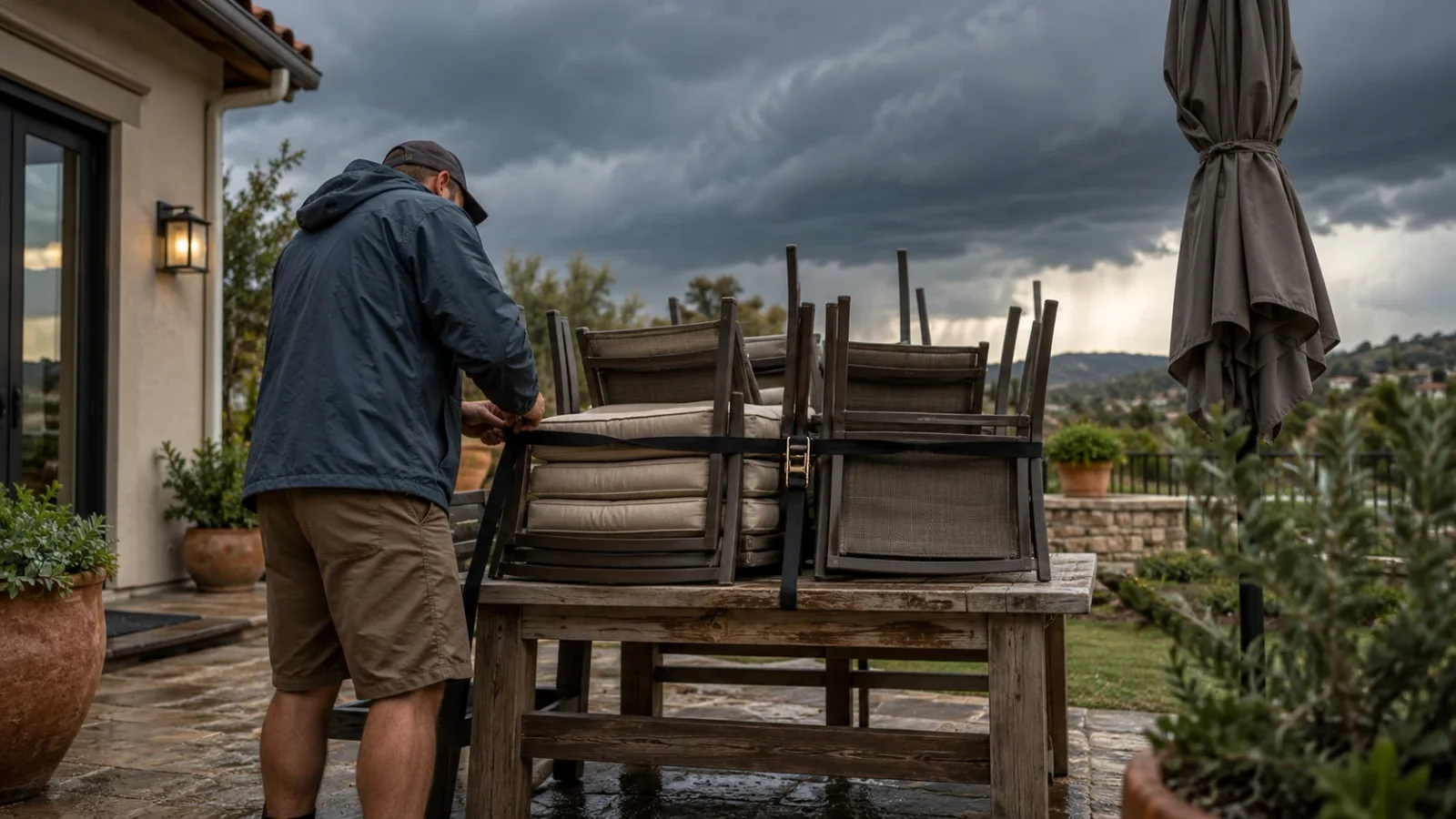
Storm preparation is a race to remove predictable failure paths: loose objects, blocked drainage, a weak sump backup and unsafe generator plans. Stop exterior work once conditions are already dangerous.
Start with water paths and loose exterior objects
| When / trigger | What to do | Why it sits here |
|---|---|---|
| 48–24 hours before | Bring in or secure loose furniture, grills, planters, tools, and trash bins | Wind turns ordinary objects into projectiles. |
| Before rain | Clear accessible gutters, surface drains, and downspout outlets | Blocked drainage can push water toward the building. |
| Before outage risk | Test sump and battery backup; charge phones, lights, and power banks | A storm often combines rain with power loss. |
| Documentation | Photograph exterior/interior condition and keep insurance/contact records accessible | A dated baseline helps after damage. |
| Generator plan | Operate portable generators outside and well away from openings; never in garage | CPSC/Ready.gov warn about deadly CO. |
| After storm | Inspect from safe ground for roof, tree, siding, drainage, and utility damage before normal routines resume | Damaged lines and unstable trees can make cleanup dangerous. |
Conditions that mean shelter matters more than maintenance
- Tree or branch is touching service lines.
- Sump backup fails test.
- Roof already leaks before storm.
- You do not have a safe generator location.
Generator carbon-monoxide safety is non-negotiable
High tree work, roof tarping in unsafe conditions, downed electrical lines, structural damage, and generator transfer-switch work require qualified professionals or emergency services.
The post-storm walk should be from a safe distance first
Hurricane zones may need shutters and evacuation planning; inland thunderstorm areas may emphasize trees, sump power, and hail; wildfire regions have different debris and air-quality priorities.
Spend on drainage, backup power strategy, and secure exterior conditions before convenience items. A generator is not useful if it cannot be operated safely outside away from openings.
Finish exterior preparation before wind, lightning, or flooding makes outdoor work unsafe. Secure loose objects, clear accessible drainage paths, test the sump backup, and charge communication devices. Once severe weather starts, follow local warnings and shelter guidance. After the storm, wait for officials if evacuation orders remain in effect and begin from a safe ground-level view; do not approach downed lines, unstable trees, damaged roofs, or floodwater.
A safe storm checklist ends before the storm begins
Use the calm period to bring in furniture and loose objects, clear reachable drainage paths, confirm the sump system is ready, charge essential devices, and photograph exterior conditions from safe ground. Stop outdoor work when strong wind, lightning, or rising water makes it unsafe; a late gutter or roof task is not worth a fall or electrical injury.
For a portable generator, CPSC says to operate it outside only, at least 20 feet from the home, with exhaust directed away from doors, windows, and vents. Never run it in a garage, even with the door open. Follow the generator manual for wet-weather shock precautions and use working CO alarms indoors.
- Keep the main water shutoff and electrical service location known in case storm damage creates a leak or electrical hazard.
- Do not enter floodwater around electrical equipment.
- Photograph damage only when the location is safe; documentation is never worth a fall, shock or tree hazard.
After conditions are declared safe, check from the ground for changes to drainage, visible roof edges, siding, doors, windows, and exterior equipment. Compare with your pre-storm photos before approaching a damaged area. Photograph only from a stable, safe location and contact utilities or emergency services for downed wires, gas odor, or structural instability.
Place emergency supplies where household members can reach them without crossing exposed areas. Include water, needed medications, flashlights, charged power banks, and a written contact plan for a power outage. If anyone depends on powered medical equipment, discuss backup and relocation plans before storm season with their clinician and local emergency services. Know which public alert source serves your address and how you will receive warnings if cell service or home internet fails. Keep paper copies of insurance, medication, and emergency contact details in a dry, reachable place. For a flood-prone home, make the evacuation decision before water reaches roads or the home’s electrical equipment.
The article specifies at least 20 feet from the home with exhaust directed away. Never run a portable generator in a garage or near an opening, even when weather is bad.
Storm-prep questions
What should be finished before wind and lightning make outdoor work unsafe?
Secure loose outdoor objects, clear the drainage points you can reach safely, close and latch windows and doors, test the sump system, charge phones and lights, and move vehicles or valuables away from obvious flood or falling-tree exposure before conditions deteriorate. Once wind, lightning or heavy rain begins, do not climb ladders, clear roofs or handle large outdoor objects. Storm preparation has a cutoff point; after that, personal safety takes priority over maintenance.
How should I prepare for heavy rain if the sump pump depends on grid power?
Test both the primary sump pump and the backup arrangement before the storm. If the backup is battery-powered, verify battery condition and alarms according to the manufacturer. If you use a generator for backup power, plan the connection and fuel safely in advance rather than improvising during an outage. Also reduce incoming water by confirming gutters, downspouts and grading are functioning, because backup power cannot compensate indefinitely for poor drainage around the foundation.
Where can a portable generator be operated safely during a power outage?
CPSC says portable generators should be operated outside only, at least 20 feet from the house, with exhaust directed away from the home and other occupied structures. Never run one in a garage, basement, shed or near doors, windows or vents. Use working CO alarms inside the house. Generator placement is a life-safety rule, not a convenience tradeoff when weather is bad or extension-cord routing is awkward.