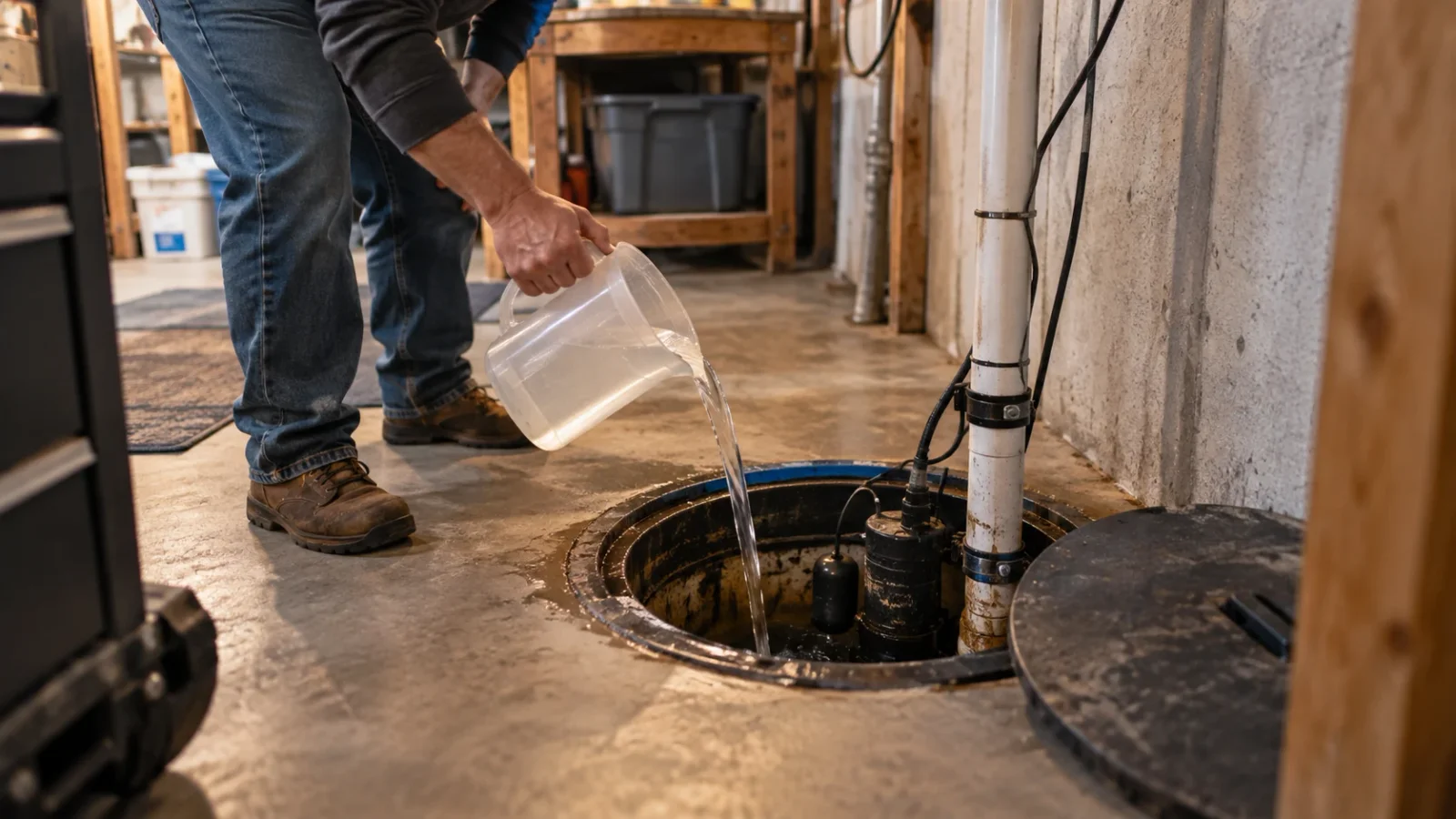
The pump is only one link in the chain. A working motor is not enough if the check valve fails, the discharge is blocked by ice or the battery backup is dead when the power goes out.
Test before the wet season arrives
| When / trigger | What to do | Why it sits here |
|---|---|---|
| Before wet season | Pour water into the pit until the float triggers; confirm strong discharge | A dry-weather test verifies the pump can start. |
| Quarterly in active homes | Remove debris that can obstruct the float or intake without disturbing wiring | A jammed float can defeat a good motor. |
| Before freezing weather | Confirm the discharge route will not freeze shut or dump back at the foundation | A frozen outlet can stop pumping. |
| Every power-outage season | Test battery backup according to its manual and record battery age | Backups fail silently when batteries are neglected. |
| After a major storm | Listen for excessive cycling and inspect discharge/yard erosion | Storm load can expose a marginal system. |
| As equipment ages | Record install date and replacement planning range rather than waiting for failure | Pumps that cycle heavily may age faster than lightly used pumps. |
Changes in sound or cycle time are useful warning signs
- Pump hums but water does not move.
- Float sticks or needs hand movement.
- Water returns to pit after shutoff.
- Backup alarm or battery test fails.
Test the backup as a separate system
A primary pump that starts correctly does not prove the house is protected during an outage. If you have a battery backup or secondary pump, follow its manufacturer procedure and verify that it can take over when the primary power or pump is unavailable. Note the battery age, alarm behavior, charger status, and where the backup discharge joins or leaves the system. A warning light that no one recognizes is not a useful backup plan.
After the test, walk outside and inspect the discharge endpoint from safe ground. Water should leave the structure without immediately cycling back toward the foundation, and winter climates need a route that is not predictably blocked by ice or snow. If the buried line, check valve, electrical supply, or pump capacity is uncertain, a plumber or sump specialist can evaluate the system before the wet season rather than during the first flooded hour.
Test failure modes, not just whether the motor turns on
A useful pre-season test confirms that rising water activates the float, the pit level falls, and water exits at the intended discharge point. Note unusual noise, vibration, repeated short cycling, or visible backflow. Clean only as the manufacturer allows; do not reach into a powered pump or change the pit cover or electrical arrangement as part of a casual test.
Treat a backup as its own system: follow its manual, record battery age, and verify the alarm and charger indicators. Battery replacement timing depends on chemistry, operating conditions, and the maker’s instructions, so use the printed service guidance rather than a universal age. A pump that protects a finished basement or has frequent cycles may justify a professional condition assessment and a second layer of protection.
- Keep the pump model, install date and backup-battery date in the house record.
- Keep makeshift extension-cord arrangements out of a wet sump area.
- After a major storm, note how frequently the pump cycled; a new pattern can reveal drainage changes.
Backup power and replacement age belong in the same plan
Homes with spring snowmelt, monsoon rain, hurricanes, high groundwater, or frozen discharge lines need different test windows. Put the reminder ahead of the local water season.
A second pump, battery backup, alarm, or generator connection costs more than a basic test but may be justified by finished basements or frequent outages. Base redundancy on consequence.
Test at the start of the local wet season and after work on the pump, float, check valve, or discharge route. In a high-water home, add the manufacturer-recommended periodic checks while the pump is active. Record how long the pit takes to empty and whether the pump stops cleanly; a new pattern can flag a clogged screen, changed inflow, or discharge issue before the next storm.
The pump, float, check valve, backup, and discharge route all matter. A working motor cannot protect the house if water cannot leave or returns toward the foundation.
Electrical faults and buried discharge problems need qualified help
Electrical receptacle problems, sealed-pit radon systems, sewage ejectors, major discharge redesign, and work in a flooded area with electrical hazards belong to qualified professionals.
Sump-pump questions
When should I test a sump pump if my wet season varies year to year?
Tie the test to the season that actually raises groundwater at your property—before spring snowmelt, a rainy season or the local storm period. Then retest after service, a long dry period or any event that may have affected the discharge line. Pour water into the pit only in a way that follows the pump setup and lets the float operate normally. The useful question is whether the pump starts, moves water and shuts off correctly before the wet period begins.
Why should the discharge line be checked along with the pump?
Because a working motor cannot protect the basement if water cannot leave the house. Check that the discharge path is connected, unobstructed and routed where it will not immediately return to the foundation. In freezing climates, look for sections vulnerable to ice blockage and follow the installer or manufacturer design. Also listen for a failed check valve or short cycling. A full system test includes the pump, controls, check valve and discharge—not just the motor sound.
How often should a battery-backup system be tested?
Use the battery-backup manufacturer's test interval and add a deliberate test before the wet season and after any power event that may have drained the battery. Confirm the backup pump can start when primary power is unavailable, inspect battery age and connections as directed, and verify alarms or indicators. A backup that has never been tested under simulated outage conditions is only an assumption, not a reliable layer of flood protection.