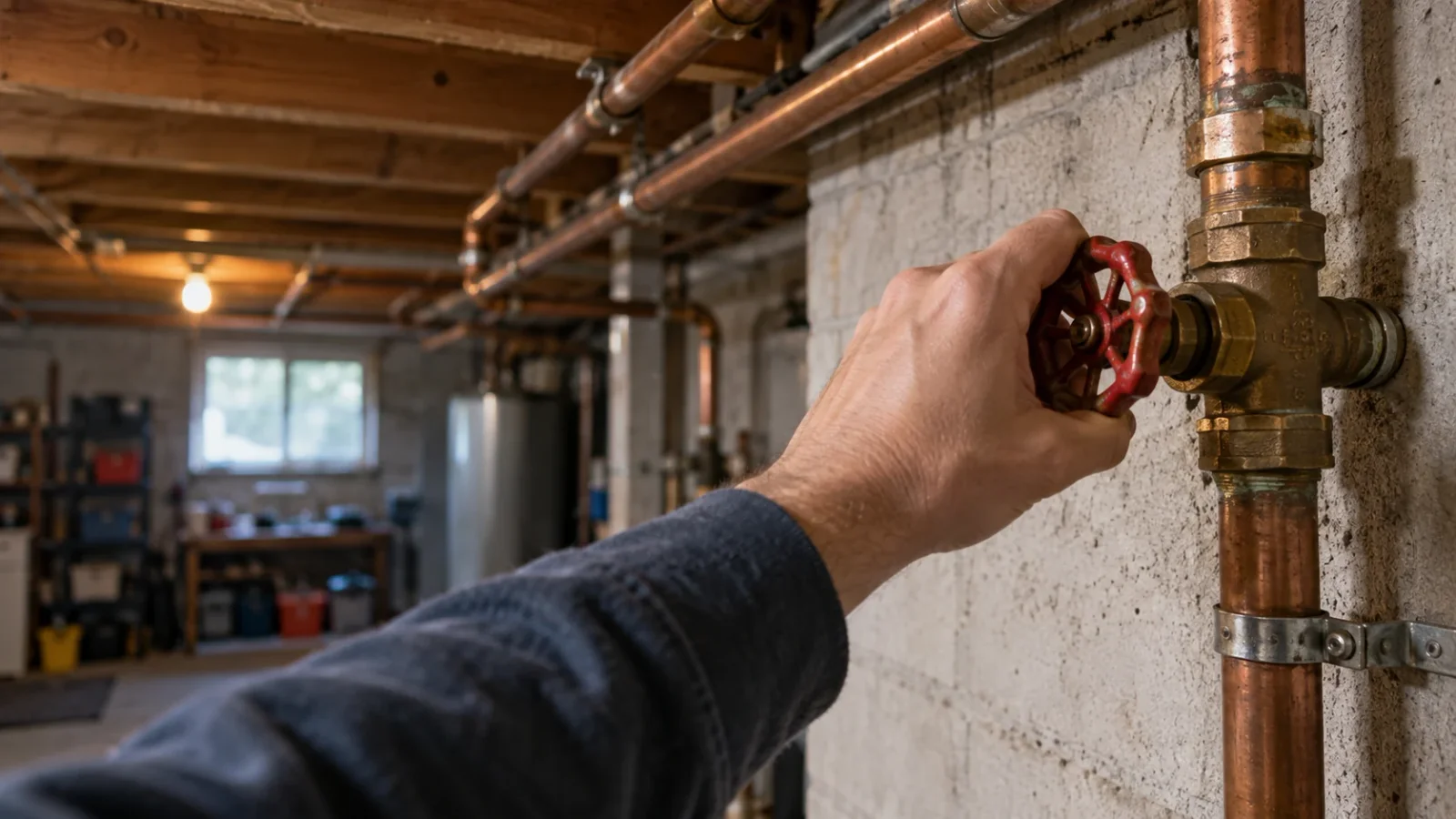
A shutoff you cannot find or move is not much help during a leak. Locate the main and fixture valves in calm conditions, tag them clearly and record any valve that feels seized, leaks at the stem or cannot be operated safely.
Know every shutoff before there is water on the floor
| Trigger | House task | Reason to schedule it |
|---|---|---|
| Move-in / today | Find the main water shutoff and confirm every adult knows it | Seconds matter when a supply line fails. |
| Twice yearly | Exercise accessible shutoff valves gently and check for seepage | A valve that has not moved for years may fail when you finally need it. |
| Quarterly | Inspect under sinks and behind accessible appliances for moisture or corrosion | Small drips can damage cabinets and subfloors quietly. |
| Yearly | Inspect flexible supply lines for bulges, rusted braid, stressed fittings, or abrasion | Replace based on condition and manufacturer guidance, not appearance alone. |
| Before long trip | Decide whether shutting the main is appropriate for your plumbing/heating setup | Some homes have boilers, fire sprinklers, irrigation, or other systems that change the decision. |
| When risk justifies it | Consider leak sensors or automatic shutoff devices in high-consequence locations | Detection can reduce the time a leak runs unattended. |
Practice the leak response before there is a leak
A calm practice run should end with everyone who may be home during an emergency knowing where the main water shutoff is and how to reach it. Do not wrench on a corroded or seized valve simply to prove you can close it; that is exactly the condition to schedule for repair. At fixtures and appliances, look for rust, mineral trails, swollen cabinet material, staining, dampness or supply hoses that are kinked, abraded or poorly supported.
Focus sensors and inspections where a slow leak can run unnoticed: under sinks, behind toilets, at washing machines, dishwashers, refrigerators with water lines, water heaters and any plumbing above finished rooms. An automatic shutoff can reduce risk, but it does not replace sound plumbing or regular checks. Record the valve type, the date it was last exercised and any location that is difficult to access so future service does not begin with a search.
- Keep the main valve unobstructed by storage.
- Do not force a valve that begins leaking around the stem when operated.
- After any supply-line replacement, recheck the connection after the appliance has completed several normal cycles.
If the meter is accessible, record its reading after all fixtures and water-using appliances are off, then check again after a short interval without using water. Unexpected movement is a clue to investigate, not proof of a leak: irrigation, a running toilet, softener regeneration, or a hidden appliance cycle can explain it. Use the meter as a periodic screening step and follow up on unexplained changes.
Choose sensor locations by consequence and response time. A sensor under a washing machine may alert someone nearby, while a sensor at a water heater above a finished room may justify a connected alert or automatic shutoff because damage can spread before anyone checks the room. Test each device using its own instructions, confirm alerts reach the intended person, and replace batteries or sensors at the stated interval.
Stains, corrosion and stiff valves deserve an earlier response
- Valve will not move with reasonable force.
- Corrosion or green/white deposits grow at fittings.
- Flooring or cabinet base swells.
- Water meter shows unexplained use when fixtures are off.
Match the plan to the plumbing layout. Freeze-prone homes need accessible isolation for exterior faucets; slab homes may locate the main in a garage or service box; well systems add pump and pressure-tank controls. Condominiums may have shared risers or building-level shutoffs, so confirm which valves serve only your unit and which require property-manager coordination.
Spend first on accessible shutoffs, sound supply connections, and early leak detection at high-consequence locations. A braided appearance alone does not establish a hose’s age or condition; check for bulges, corrosion, abrasion, kinks, and stressed fittings, and use the appliance maker’s replacement guidance.
Braided lines, sensors, and valve replacement are usually modest compared with an unattended leak. Spend first where failure would release water rapidly or go unnoticed.
Consider sensors where a small leak could go unnoticed or damage finished space. Test alerts as the device recommends; detection does not replace sound plumbing or regular checks.
Do not force a failing main valve or work around live electrical hazards
Do not force a seized valve, disturb old piping that may be fragile, or alter fire-sprinkler/boiler systems without qualified advice. Active leaks near electrical equipment require extra caution.
Leak-prevention questions
How often should shutoff valves be exercised so they do not seize?
Twice a year is a practical planning interval for valves that are safe and intended for homeowner operation, but follow the valve and plumbing guidance for your house. Turn the valve gently through its normal range and return it to service; do not force a corroded or fragile valve. If a main shutoff will not move, leaks around the stem, or does not actually stop flow, schedule a plumber before an emergency proves it unusable.
Which supply lines deserve the closest leak-prevention attention?
Pay closest attention to flexible supply connections serving toilets, washing machines, sinks, ice makers and other fixtures where a failed hose can release water continuously. Look for corrosion, bulging, abrasion, damp fittings and age-related deterioration, and follow the appliance or connector manufacturer's replacement guidance. Water-heater connections and any line in a hidden or finished area deserve extra respect because a slow leak may remain unnoticed until damage spreads.
Is an automatic leak shutoff worth considering when I travel often?
It can be, especially when the house is often empty or has finished space below plumbing. A leak sensor can warn you; an automatic shutoff can limit water flow after a detected event. The value depends on system design, reliability, monitoring and whether critical equipment needs uninterrupted water. Treat it as a layer of protection, not a reason to skip hose inspections, valve maintenance or a house check during long absences.