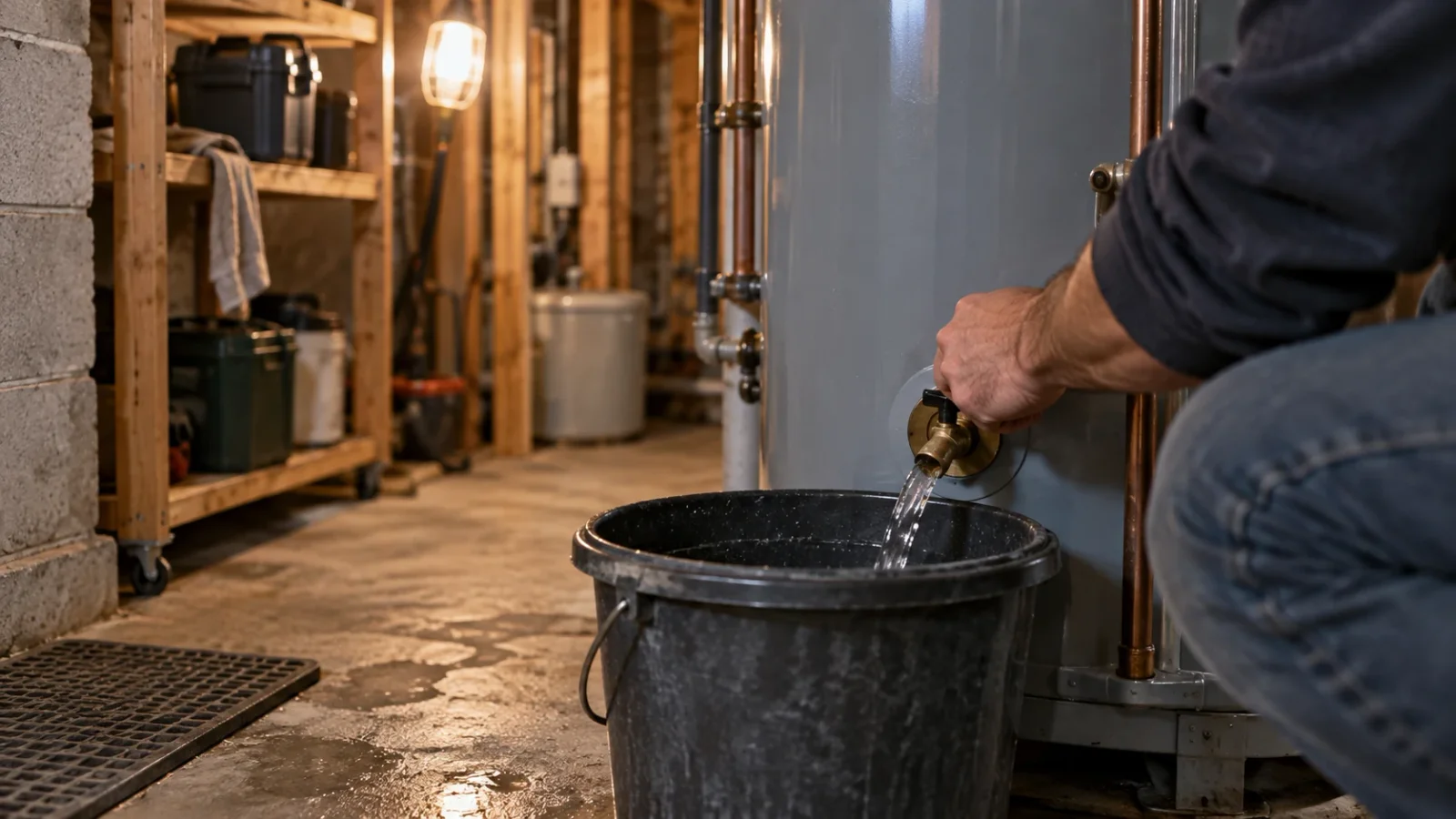
Before touching a drain valve or anode, identify the exact model and read its manufacturer manual. Flushing, descaling and anode service vary by unit, water conditions and maintenance history; do not assume a generic routine is safe for every tank.
Build the plan around the exact water heater
| Window | Maintenance checkpoint | What changes the date |
|---|---|---|
| Monthly glance | Look for moisture at fittings, drain valve, T&P discharge, and tank base | Early seepage deserves attention before corrosion spreads. |
| Yearly planning point | Review the manual for sediment flushing instructions | Hard water and heavy use can change how quickly sediment accumulates. |
| Every few years if serviceable | Inspect anode condition as the manufacturer permits | Anode depletion depends strongly on water chemistry and tank design. |
| Yearly | Check that the T&P discharge path is unobstructed and terminates as required locally | Do not cap or plug a safety discharge. |
| Ongoing | Keep combustible storage away from fuel-burning equipment and keep vents clear | Clearances and venting are safety issues, not convenience. |
| As age and corrosion rise | Price replacement before leakage becomes urgent | A planned swap is easier than a failed tank with water damage. |
Leak and corrosion signs that move replacement forward
- Rust-colored seepage at the tank shell.
- Persistent water at the base.
- Hot water becomes discolored with corrosion clues.
- The burner/venting area shows soot or abnormal flame behavior.
Gas, wiring and pressure-safety work are not trial-and-error DIY
Gas piping, combustion, venting, electrical elements, T&P valve problems, and any tank that is actively leaking should be handled by qualified service. Never defeat a relief device.
Plan the replacement before the tank chooses the date
Hard-water areas can accumulate scale faster; garages and unconditioned spaces change heat loss and freeze exposure; local codes determine permitted installation details.
Use lifespan ranges only as planning signals. InterNACHI emphasizes that use, weather, installation, maintenance, and materials affect service life; keep a replacement reserve rather than betting on one birthday.
Give the water heater a repeatable leak check. Photograph or note the tank base, drain valve, supply connections and T&P discharge area when they are dry, then compare those same points during later checks. Corrosion, rusty seepage or recurring moisture matters more than the birthday printed on the data plate. As the unit ages, gather replacement quotes before a leak becomes urgent, especially when the tank sits over finished space or in a location where water damage would spread quickly. For a replacement estimate, have the installer confirm household demand, local code, venting or electrical capacity, and whether the existing drain pan and relief-discharge route fit the proposed unit. A price comparison is meaningful only when the installation requirements match.
Protect the space below and keep a service record
Water heaters are unusual because the consequence of failure can be larger than the cost of the appliance. A tank over finished space, in an upper floor, or in a location without a clear drain path deserves closer leak monitoring. Record tank or tankless type, fuel, model, approximate age, shutoff location, drain-pan presence, and where the temperature-and-pressure relief discharge terminates.
Keep a short service log with the date, task, visible condition, and provider or model-manual instruction followed. Note recurring leaks, corrosion, discolored hot water, changing rumble, or a relief valve that leaks, and arrange qualified service when a safety control or active leak is involved. Use the actual manual for flush, descaling, and anode intervals rather than treating a generic calendar as the rule. Store the manual, installation receipt, model-plate photo, and service invoices together. Before a visit, ask the technician to identify which maintenance step applies to this exact model and what condition should move the next check earlier. Keep the recommended next interval in writing rather than copying a generic schedule. If the heater is replaced, record the new installation date and warranty details so the old unit’s history does not become the new unit’s schedule.
- Keep the installation manual and model number with the service record.
- Use leak sensors or a drain-pan alarm where a tank failure would damage finished space.
- Treat gas, electrical, combustion and relief-valve problems as qualified-service work.
Water-heater maintenance questions
Does every water heater need the same flushing schedule?
No. Flushing guidance varies by tank design, water chemistry and manufacturer. Some tank heaters benefit from periodic sediment removal, while tankless equipment has its own descaling procedure and interval. Start with the owner's manual and local water conditions rather than copying one universal annual procedure. If valves are seized, the drain will not close, or the heater is already leaking, a routine flush can become a plumbing problem and is better handled professionally.
What do anode-rod and T&P-valve checks tell me that flushing does not?
An anode rod, where the tank design uses one, sacrifices itself to help protect steel from corrosion; its condition tells you about corrosion protection rather than sediment. The temperature-and-pressure relief valve is a safety device and must be handled according to the manufacturer instructions. Neither check is interchangeable with flushing. If you are unsure how to test a safety valve or the discharge arrangement looks wrong, have a plumber evaluate it.
Which signs make replacement planning more urgent than another maintenance visit?
Active leakage from the tank body, significant corrosion around the base or fittings, repeated loss of hot-water capacity, or an older unit that now needs frequent repairs should move replacement planning forward. Age alone is not a failure diagnosis, but it changes the consequence of waiting. Collect the model, installation date, fuel type, venting or electrical requirements and local replacement quotes before the old unit creates an emergency.
Flushing and anode work depend on tank design, water chemistry, condition, and manufacturer guidance. An old, neglected tank may need professional judgment before an aggressive first flush.