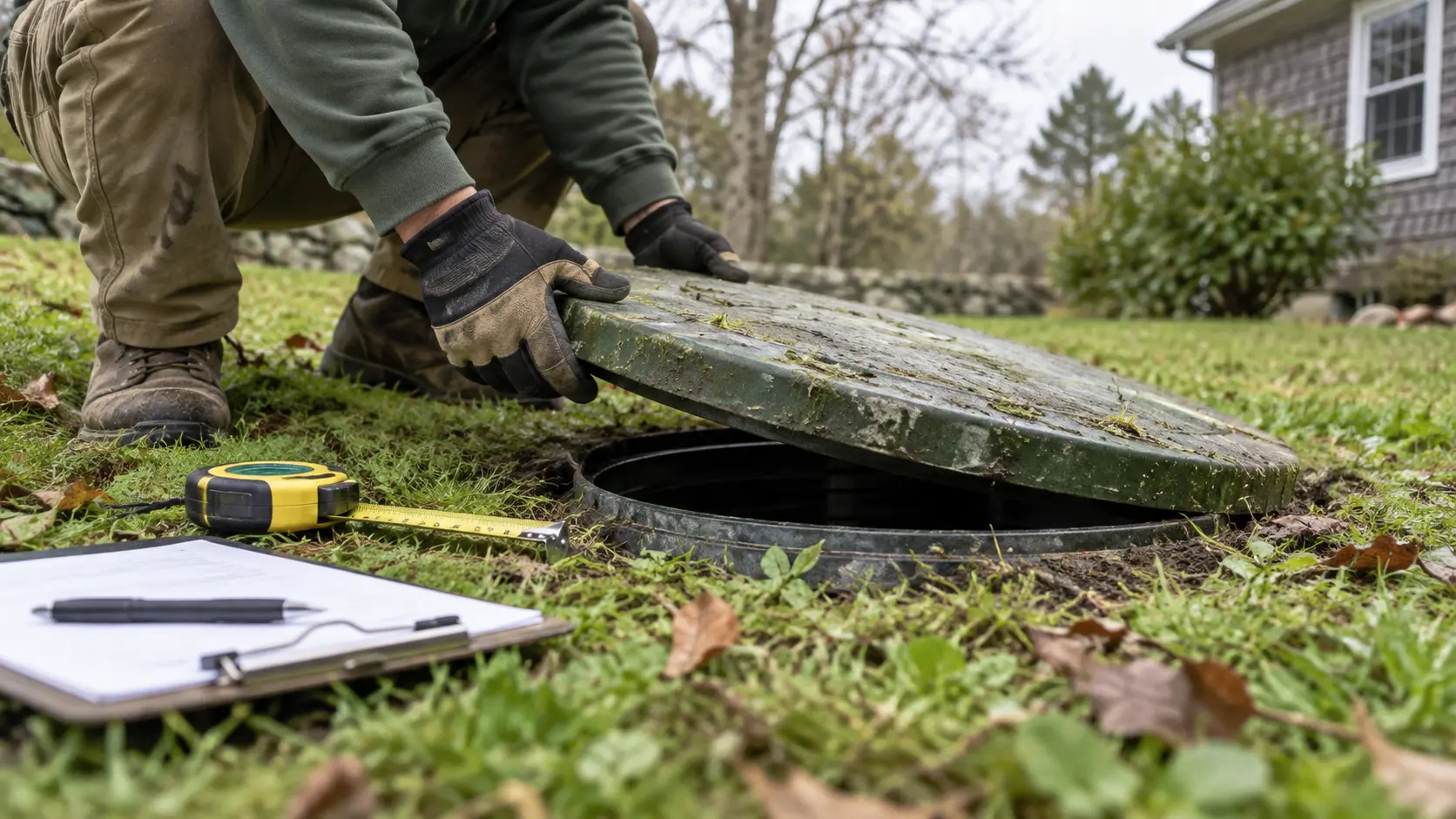
A septic system is easy to ignore precisely because it works quietly underground for years at a time — until it doesn't, and the repair bill is an order of magnitude larger than routine maintenance would have cost. The EPA's own guidance gives a specific interval to work from, and knowing what a professional inspection actually checks helps you understand what you're paying for.
The EPA's general interval
EPA says a conventional household system should be professionally inspected at least every three years, with pumping typically every three to five years when the inspection shows it is needed. EPA’s broader FAQ describes an inspection range of one to three years, reflecting differences in system design and local practice. Alternative systems with pumps or electrical controls generally need yearly service. Follow permit conditions, manufacturer instructions and local health-department requirements when they are more specific than a general interval.
| System type | Recommended interval |
|---|---|
| Conventional septic tank | Professional inspection at least every 3 years; pump every 3-5 years |
| System with pumps or electrical float switches | Inspect annually; mechanical components often need replacement every 10-20 years |
What a professional inspection actually checks
A septic professional checks for leaks and measures scum and sludge relative to the outlet. EPA’s pumping triggers are specific: pump if the bottom of the scum layer is within 6 inches of the bottom of the outlet, the top of the sludge layer is within 12 inches of the outlet, or combined scum and sludge exceed 25% of the tank’s liquid depth. Keep those measurements in the service record so the next visit can use your system’s actual accumulation rate rather than guessing from age alone.
- Wastewater pooling or surfacing on the ground above the drainfield
- Sewage backing up into household plumbing — often a sign the drainfield's biomat layer has clogged, which becomes more likely as a drainfield ages past 25-30 years
- Slow drains throughout the house that don't respond to normal clearing
- Unusually lush, bright green grass over the drainfield area (can indicate effluent surfacing subtly)
- Sewage odor near the tank or drainfield, especially after rain
Protect the drainfield and know when to call
Build a small maintenance reserve from local quotes rather than relying on a national repair-cost figure. Ask the service provider to record tank access, measured sludge and scum, pump/filter condition, work completed and the next recommended inspection window. If the inspection finds a repair, request the evidence and a written scope before comparing bids. Routine service is easier to budget when the tank location, risers and service history are already documented.
EPA recommends prompt service if sewage backs up, pools above the drainfield, or persistent sewage odors appear. Multiple slow drains can also indicate a broader system issue, though a single slow fixture may be a local plumbing clog. Do not open a septic tank or enter it: toxic gases and oxygen deficiency can be fatal. Keep vehicles and heavy loads off the drainfield, direct roof and sump water away, and avoid flushing wipes, grease, chemicals or other non-waste material that can harm the system.
- Keep a written log of pump-out dates so you're not relying on memory for a system you rarely think about.
- Avoid flushing anything beyond toilet paper and human waste — wipes, grease, and other solids accelerate how fast the tank fills.
- Space out heavy laundry days rather than running several loads back to back, which floods the system with more water than it can process at once.
- Keep vehicles and heavy equipment off the drainfield area, since soil compaction reduces its ability to absorb effluent.
- Know your tank's exact size and your household's typical usage, since both affect where in the 3-5 year range your actual pumping need falls.
Local health departments often keep permit and inspection records for septic systems in their jurisdiction, and checking with yours before you buy a home (or if you're unsure of your own system's history) can save real guesswork — some departments will tell you the last recorded pump-out date, the system's permitted design, and whether any violations were ever filed. This is especially worth doing if you inherited a system from a previous owner with no maintenance records of your own, since starting an inspection schedule with no baseline data makes it harder to judge whether a 3-year or 5-year interval is the right fit for your specific tank and household.
It also helps to know your system's design capacity relative to your household size before you assume a standard interval applies to you. A tank sized for a three-bedroom home that now supports a larger blended household, a home office with added water use, or a long-term guest will fill faster than the original design assumed, which is exactly the kind of change that argues for scheduling your next inspection sooner rather than assuming the same interval that worked years ago still fits your current usage.
How much does it cost to pump a septic tank?
Service prices and repair costs depend on region, tank access, system design and the work found. Ask for an itemized local quote that separates inspection, pumping, filter cleaning, riser access and repairs. The cost comparison should help plan routine service, not pressure you into a replacement without a written diagnosis.
Can I pump my own septic tank instead of hiring a professional?
This is not recommended. Septic tanks contain dangerous gases and require specialized pumping equipment to safely and completely remove solids, and a professional inspection at the same visit checks for leaks and structural issues that a DIY pump-out would miss entirely.
What household habits shorten the time between pump-outs?
Flushing anything beyond toilet paper and human waste, running multiple heavy laundry loads back to back, and having a larger household than your tank was sized for all accelerate how quickly solids accumulate, pushing your actual needed interval toward the more frequent end of the 3-to-5-year range.
How do I know if my septic system is already failing?
Watch for wastewater pooling on the ground above the drainfield, sewage backing up into household plumbing, slow drains that don't respond to normal clearing, unusually lush grass over the drainfield, or sewage odor near the tank or drainfield especially after rain — any of these warrants a professional inspection promptly rather than waiting for your next scheduled visit.
A system that has already failed rather than just needing routine service tends to show a specific combination of symptoms rather than just one isolated sign. Multiple slow drains throughout the house happening at once, rather than a single fixture, points toward a system-wide backup rather than a localized clog. Combine that with any sewage odor outdoors near the drainfield, and the picture points toward the tank or drainfield itself rather than an isolated plumbing issue inside the house, which is a useful distinction when you're deciding whether to call a plumber or a septic service company first.
If you're ever uncertain which type of professional to call, a septic service company can generally diagnose whether the problem originates in your septic system versus your household plumbing, even if the eventual fix requires bringing in a plumber for an internal repair. Starting with the septic company when multiple symptoms point outward, rather than starting with a plumber who may only be equipped to address the interior side of the problem, often gets you to an accurate diagnosis faster.