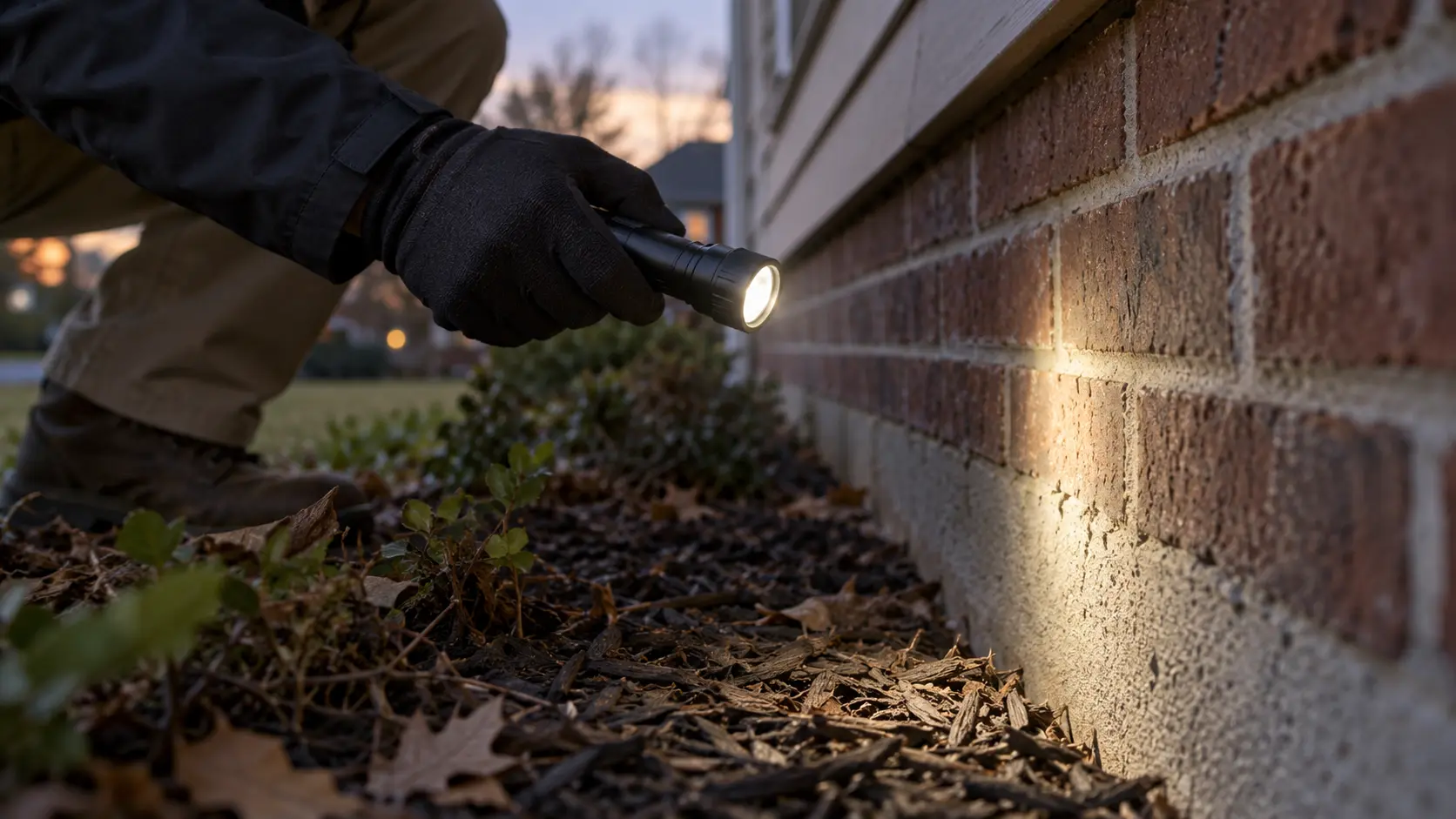
Termites can feed inside wood or behind finishes, so the visible surface may not show the extent of activity. A schedule helps, but it does not replace a response to fresh signs: mud shelter tubes, swarmers emerging indoors, discarded wings, or wood that has been damaged. Record where and when you saw evidence, avoid disturbing suspected galleries, and arrange a qualified inspection to determine whether activity is current and what treatment, if any, is justified.
The general recommendation
NPMA recommends routine foundation checks and an annual professional inspection as a preventive baseline. That is industry guidance, not a single federal schedule for every property. The useful interval depends on local termite pressure, prior treatment and warranty terms, construction details, moisture conditions, and what the last inspection found. In high-risk areas or where a treatment contract requires it, keep the stated cadence; elsewhere, ask a licensed local professional or extension office what is appropriate rather than assuming every home has the same risk.
What actually counts as a warning sign
- Swarmers (winged termites) inside the home or around foundation areas, especially in spring
- Mud shelter tubes running along foundation walls, piers, or other surfaces — these protect termites as they travel between the soil and the wood they're feeding on
- Mud packed into construction joints or gaps where wood meets masonry
- Wood that sounds hollow when tapped, or that gives easily when probed with a screwdriver
- Discarded wings near windowsills or doors, left behind after a swarm
Why your region changes how urgent this is
Termite risk varies by species, climate and property. Mississippi State Extension notes that buildings in areas with Formosan termite activity may warrant annual inspection, but that regional advice should not be generalized into a national rule. Check your state extension service and treatment documents for local risk. A past treatment does not make the building permanently immune; however, swarmers near outdoor lights or old inactive damage do not by themselves prove a current structural infestation.
What a professional inspection actually involves
An inspector examines the foundation perimeter, crawlspaces, attic framing where accessible, and any wood-to-soil contact points around the property (deck posts, fence attachments, wood mulch against the foundation) for the signs listed above. Many companies offer this as a low-cost or free annual service specifically because it can lead to a treatment contract if activity is found — which isn't a reason to skip it, but is worth knowing going in so you can evaluate any recommended treatment on its own merits rather than assuming the inspection itself is a sales pretext.
Reducing risk between inspections
- Keep mulch and soil at least several inches below the home's siding or foundation trim, since built-up mulch or soil creates a direct wood-to-ground pathway termites can use.
- Fix moisture problems promptly — leaking gutters, poor grading, and standing water near the foundation all attract termites and other wood-destroying pests.
- Store firewood away from the house rather than stacked against an exterior wall.
- Address any wood-to-soil contact around the property (deck posts set directly in the ground, for example) since this bypasses the barrier a foundation otherwise provides.
- If you see any of the warning signs above between scheduled inspections, don't wait for the next annual visit — call for an inspection promptly.
Many mortgage lenders and most home-purchase transactions in high-risk regions require a wood-destroying insect inspection report as a condition of closing, which is a useful moment to establish your baseline even if you don't continue with an annual paid inspection afterward. If you skip continuing annual service, at minimum walk your own foundation perimeter a couple of times a year yourself, specifically looking for the mud tubes and swarmer signs described above, since an untrained but attentive homeowner can often catch early activity even without professional equipment.
After exterior work, check that new deck or fence components do not create concealed wood-to-soil contact, that soil and mulch remain below vulnerable siding, and that water drains away from the foundation. A change that creates a conducive condition is a reason to correct it and consider a professional inspection, especially if a treatment warranty or local guidance calls for one. Keep the inspection report and any treatment label or warranty with the house records.
Ask whether the inspection includes accessible foundation, crawlspace and attached-structure areas, what was inaccessible, and whether the written report distinguishes active evidence, old damage and conditions that invite infestation. Request a property diagram with findings and a separate itemized treatment proposal if activity is found. Moisture checks can help identify conducive conditions, but they do not by themselves confirm termites. Compare the documented scope and warranty terms before approving treatment.
How often should I get a professional termite inspection?
NPMA recommends annual professional inspections as a preventive baseline. Confirm whether local extension guidance, a prior treatment warranty, local rules or observed risk call for that interval at your property; inspect the foundation routinely between professional visits and call sooner if you find mud tubes, interior swarmers or fresh damage.
What are the warning signs of termite activity?
Watch for winged swarmers inside the home or near the foundation especially in spring, mud shelter tubes running along foundation walls or piers, mud packed into construction joints, wood that sounds hollow when tapped or gives easily when probed, and discarded wings near windowsills or doors after a swarm.
Are some regions at higher risk for termites than others?
Yes. Species and local conditions change risk, and Formosan termite areas may warrant closer inspection. Use state extension guidance and the home’s treatment history instead of applying one regional label to every structure. A nearby swarm does not prove the house is infested, but activity in the structure or mud tubes on its foundation merits prompt professional evaluation.
What can I do between professional inspections to reduce risk?
Keep mulch and soil several inches below siding or foundation trim, fix moisture problems like leaking gutters or poor grading promptly, store firewood away from the house, and address any wood-to-soil contact points around the property such as deck posts set directly in the ground.
- Ask which species and evidence the inspection found.
- Ask how the proposed treatment addresses that activity.
- Compare monitoring or retreatment terms and how long they last.
- Keep the inspection findings and treatment terms with the house record.
What to expect if activity is actually found
If an inspection turns up active termite activity, the company will typically recommend a specific treatment approach based on the termite species and the extent of activity found — options commonly include a liquid soil treatment creating a barrier around the foundation, or a bait station system placed around the property that termites carry back to the colony. Treatment approach, cost, and the warranty terms that come with it vary significantly between companies and situations, so it's reasonable to get more than one assessment before committing to a specific treatment plan, particularly for a costly whole-structure treatment.
Ask specifically whether any treatment comes with an ongoing monitoring or retreatment warranty, and for how long, since termite treatments are not always a permanent one-time fix — some require periodic reapplication or monitoring station checks to remain effective over multiple years. Understanding this upfront helps you budget for the real ongoing cost of a termite program rather than assuming a single treatment closes the issue permanently.