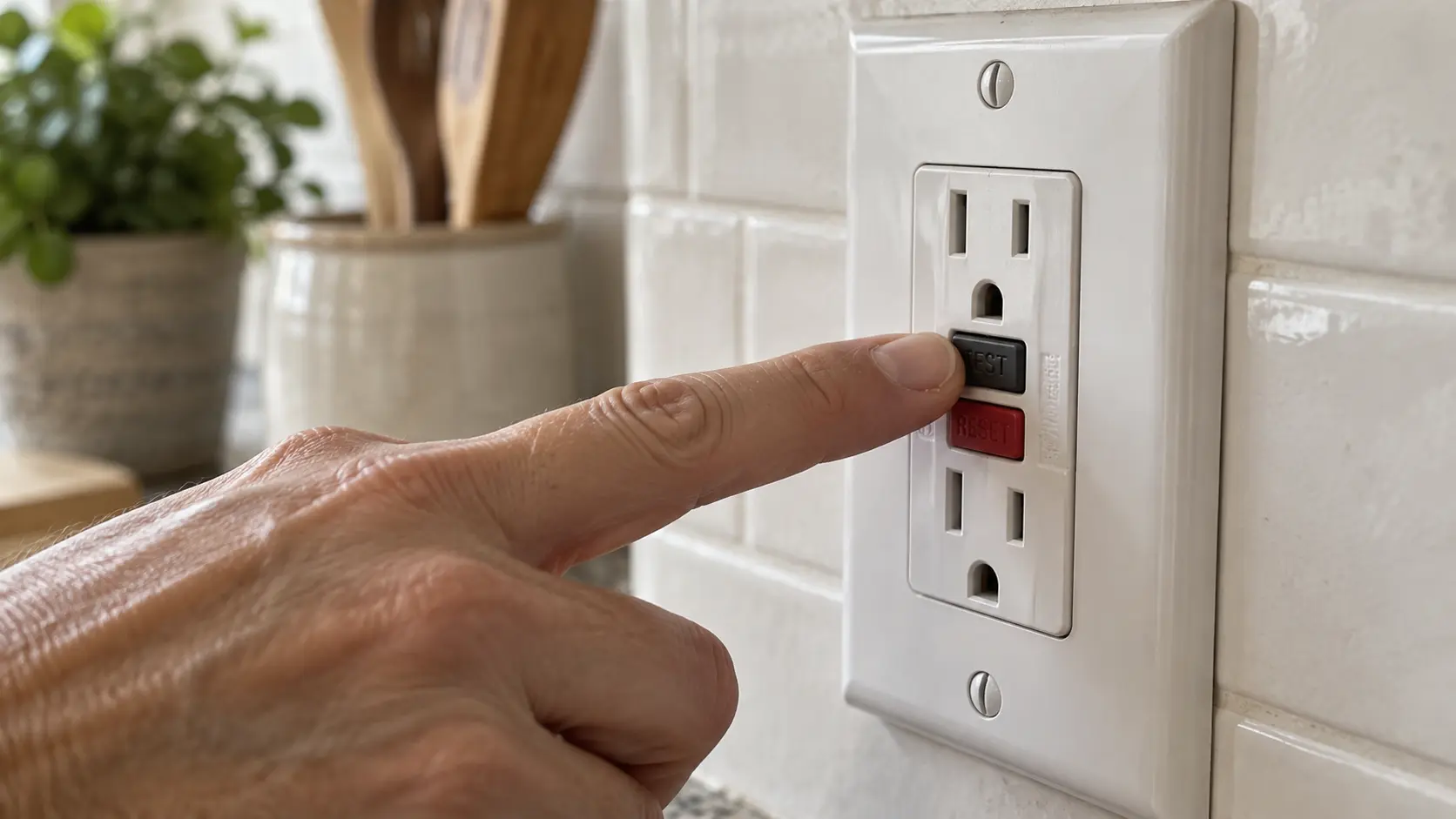
A GFCI test is a small recurring safety check, while the electrical panel is a separate system that should be assessed by a qualified electrician when warning signs or renovation plans warrant it. GFCI devices can protect outlets where water and electricity are near each other, but monthly testing and correct reset behavior matter. A hot or damaged panel, repeated unexplained breaker trips, buzzing, scorch marks or burning odor calls for professional evaluation; never remove the panel cover or touch exposed conductors.
Testing GFCI outlets: monthly, by hand
Ground-fault circuit interrupter (GFCI) outlets—the devices with TEST and RESET buttons, often used in kitchens, bathrooms, garages and outdoors—should be tested monthly under CPSC and ESFI guidance. Press TEST; power to the protected outlet should stop. Press RESET to restore it. If the device does not trip or will not reset, stop using the affected outlet and have a qualified electrician determine whether the device or circuit needs repair. Some GFCI breakers protect several downstream outlets, so the protection point may be at the panel rather than at each receptacle.
Portable GFCIs need more frequent checks: If you use a portable GFCI device (common with certain power tools or outdoor equipment), test it before each use rather than relying on a monthly schedule, since these see more physical wear and are more likely to fail between fixed-outlet testing intervals.
Why this test matters more than it seems
A device can still supply power even though its protective function may not be working, which is why the test button matters. Where one upstream GFCI protects several ordinary receptacles, identify and test the upstream device rather than assuming each outlet has separate protection. A plug-in tester can help identify wiring issues but is not a substitute for the built-in test or electrician diagnosis when results are unclear.
Electrical panel inspection: less frequent, but worth understanding
Unlike the GFCI monthly test, there's no single universal interval for having your main electrical panel professionally inspected — this is more a matter of watching for specific warning signs and having a licensed electrician evaluate the panel if you notice any of them, or as part of a broader home inspection when buying or significantly renovating.
- Breakers that trip frequently without an obvious overload cause
- A warm or hot panel cover, or a burning smell near the panel
- Visible discoloration, scorch marks, or rust on the panel or breakers
- A panel that still uses screw-in fuses rather than circuit breakers
- Flickering lights throughout the house that aren't tied to a single appliance
- A panel from a brand associated with known reliability issues (some older Federal Pacific and Zinsco panels have documented histories of breaker failure) — if you're unsure what brand your panel is, this is worth having a licensed electrician confirm
- MonthlyTest fixed GFCI outlets with TEST and confirm RESET restores power.
- Before each useTest portable GFCI devices.
- When panel warnings appearArrange a licensed electrician evaluation; do not open the panel.
- Before purchase or renovationConsider a professional panel assessment if age, brand, or condition raises concern.
What to do if you notice a warning sign
Don't attempt to diagnose or open the panel yourself beyond what's needed to reset a breaker in the normal way — electrical panel work carries real injury risk and should go to a licensed electrician. If your panel is original to an older home and you've never had it professionally evaluated, consider scheduling an inspection even without an active warning sign, particularly if you're planning renovations that will add electrical load.
- Test every GFCI outlet in the home monthly using the TEST/RESET buttons.
- Replace any GFCI outlet that fails to cut power on TEST or won't restore power on RESET.
- Test portable GFCI devices before each use rather than on a fixed schedule.
- Watch for the panel warning signs above and call a licensed electrician if any appear.
- If you don't know your panel's age or brand, ask an electrician to identify it next time you have any electrical work done.
If your home was built or last rewired before GFCI protection became standard in kitchens, bathrooms, and outdoor circuits, it's worth having an electrician evaluate whether your current outlets actually have GFCI protection at all, rather than assuming a modern-looking outlet automatically includes it. Older homes are sometimes retrofit with GFCI protection only at the breaker panel rather than at each individual outlet, which changes how you'd identify and test the protection — a panel-level GFCI breaker won't have a visible TEST/RESET button at the outlet itself, so ask your electrician specifically how your home's protection is configured before assuming the monthly outlet-level test applies everywhere it should.
How often should I test GFCI outlets?
GFCI outlets — the ones with TEST and RESET buttons found in kitchens, bathrooms, garages, and outdoor locations — are commonly recommended for testing monthly. Press TEST, which should cut power, then press RESET, which should restore it; if either step doesn't work as expected, the unit should be replaced.
What does it mean if a GFCI outlet won't reset?
An outlet that won't reset after testing has likely failed internally and is no longer providing ground-fault shock protection, even though it may still power whatever's plugged into it normally. This kind of silent failure is exactly why the manual monthly test matters, since there's no other visible symptom until protection is actually needed.
What are warning signs my electrical panel needs professional evaluation?
Watch for breakers that trip frequently without an obvious cause, a warm or hot panel cover, a burning smell near the panel, visible discoloration or scorch marks, screw-in fuses instead of circuit breakers, and flickering lights throughout the house not tied to a single appliance — any of these warrants a licensed electrician's evaluation.
How do I know if my home's GFCI protection is at the outlet or at the panel?
A panel-level GFCI breaker protects a whole circuit but won't have a visible TEST/RESET button at each outlet the way an outlet-level GFCI does. If your outlets look standard with no test buttons but you believe you have GFCI protection, ask an electrician to confirm exactly how your home's protection is configured.
What to do if you're buying a home and unsure about the panel's condition
A home inspection typically includes a general visual assessment of the electrical panel, but this is not the same as a detailed evaluation by an electrician, and a general home inspector may flag a concern without being able to fully diagnose it. If a home inspection report mentions anything about the panel's age, brand, or condition, treat that as a prompt to get a licensed electrician's own assessment before closing, rather than assuming a general inspection report's brief mention was thorough enough on its own.
This is particularly worth doing for an older home where the panel has never been documented as updated, since replacing an outdated or unsafe panel can be a significant cost that's much easier to negotiate into a purchase agreement before closing than to discover and pay for entirely on your own afterward.