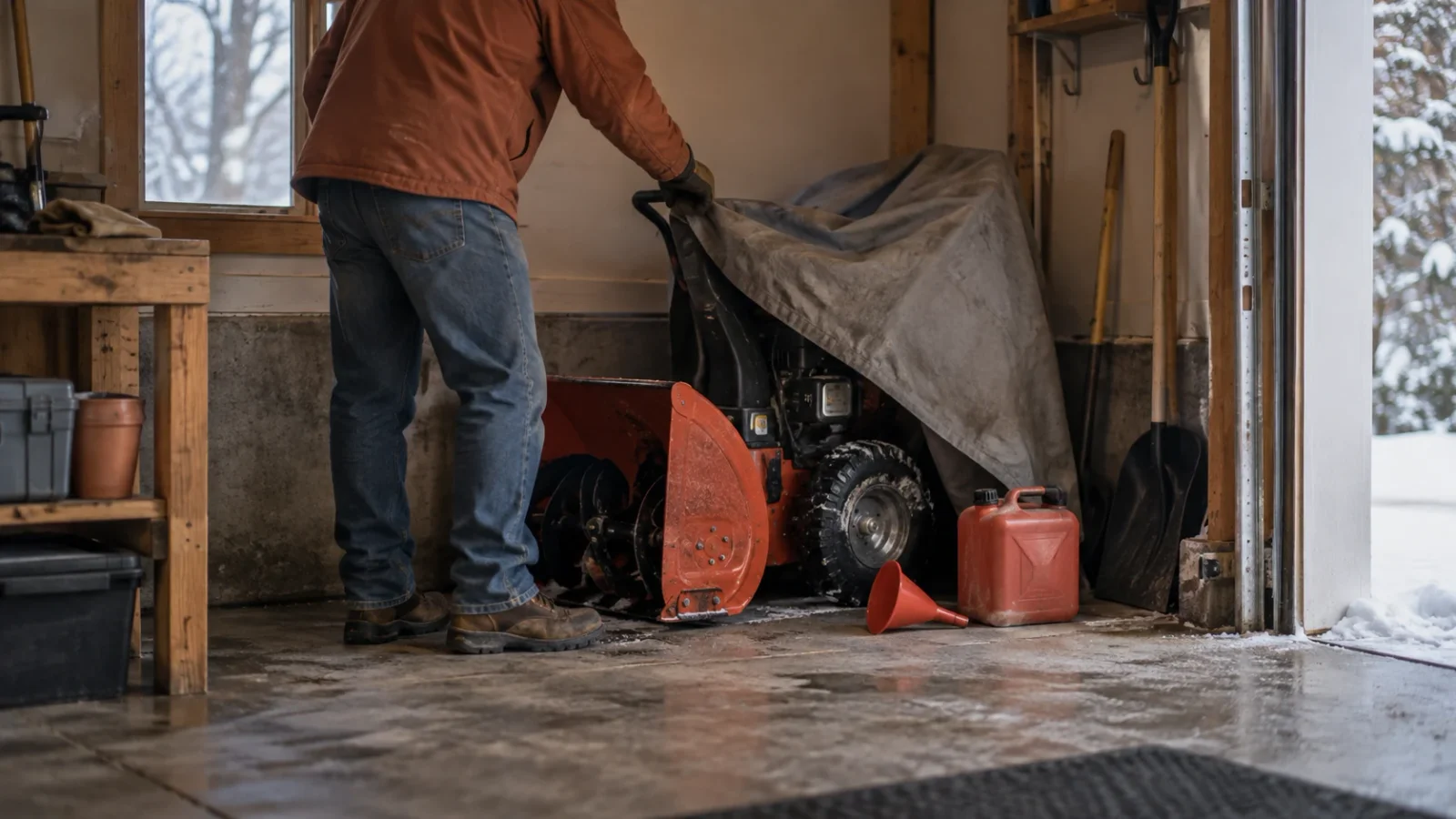
Fuel storage instructions differ by engine and fuel system. Identify the exact model first, then use one of the storage methods its manufacturer approves; do not assume draining and stabilizing are interchangeable steps.
Choose the fuel-storage method from the engine maker
| Trigger | House task | Reason to schedule it |
|---|---|---|
| Last use | Run the machine dry of loose snow, then brush/wash salt and grime only as the manual allows | Road salt and wet debris promote corrosion. |
| Before storage | Choose the manufacturer-supported fuel method: stabilized fresh fuel or drained/run-dry | Do not mix conflicting internet rituals. |
| Before storage | Change oil if the service schedule calls for it | Fresh oil avoids storing contaminated oil for months. |
| After cleaning | Dry auger housing/chute and touch up chipped protective coating where appropriate | Bare steel can rust in humid storage. |
| Storage day | Inspect shear pins, belts, scraper, skid shoes, tires/tracks, and cables | Create a parts list while wear is visible. |
| Storage location | Keep the machine dry and away from ignition sources; handle batteries per manual | Fuel and battery storage both have safety constraints. |
What poor storage looks like the following winter
- Fuel smell develops in storage.
- Tank/carburetor leaks.
- Rust is spreading under coating.
- Machine was stored with untreated old fuel.
Fuel, spark and moving-part safety still apply in the garage
Fuel leaks, carburetor removal, ignition repair, damaged auger/impeller components, and heavy corrosion around structural parts should be serviced by a qualified small-engine technician.
If the machine still develops a no-start or auger/drive fault when it comes back out, use Snowblower Fix Desk.
| Stabilized fuel | Run dry or drain | |
|---|---|---|
| When to use | When the engine maker supports treated fuel storage. | When the engine maker supports removing fuel and running dry. |
| Record for next season | Fuel date and stabilizer used. | That fuel was drained or run out. |
| Avoid | Do not combine methods casually. | Do not assume this fits every fuel system. |
Leave a startup note for next season
Unheated sheds see wider temperature swings and condensation; humid coastal storage needs stronger corrosion control; battery-equipped machines need temperature-appropriate battery care.
Planned spring service is usually easier than a no-start diagnosis on the first snow day. If the next-season check fails despite following the storage procedure, consult the engine manual or a small-engine technician before changing carburetor, ignition, or fuel components.
- Record the fuel methodNote the treatment or drain/run-dry method used.
- Log service and wearRecord oil service and parts that need attention.
- Store correct sparesKeep approved shear parts and the manual with the machine.
- Inspect before startingCheck for leaks, nesting, damaged controls, and loose parts.
Leave next winter a machine, not a mystery
Clean salt, packed snow and road residue before storage and dry the machine thoroughly. Inspect the auger housing, chute, scraper and exposed metal for coating damage or rust that should be protected. Change oil on the engine-maker schedule and service the spark plug or other items only as the manual requires. Store in a dry location where the machine is not exposed to dripping water or corrosive chemicals.
Fuel deserves a written note because manufacturer-approved storage methods differ. Briggs & Stratton describes stabilized fuel and, when stabilizer is not used, a drain-and-run-dry method. Follow the exact engine manual, record what you did and the fuel date, and do not combine procedures unless the maker says to.
- Remove or maintain the battery according to the machine instructions if equipped.
- Never store the machine with a known fuel leak.
- Put spare shear pins and the owner manual with the snowblower rather than in a separate seasonal bin.
Before storing, put the machine on a stable surface in a dry location and let the engine cool fully. Keep the exhaust clear of combustible materials and store fuel only in an approved container away from ignition sources, following local fire rules. The machine should be inaccessible to children and should not be stored with a known leak.
Before the first use next season, inspect for leaks, nesting, damaged controls, loose parts, or corrosion noted on the startup card. Check the battery and fuel according to the model instructions before starting outdoors. Storage is complete only when the next inspection can happen predictably without discovering that a service item was hidden or forgotten. Attach the manual, key or safety lock, and any removed battery note to the same storage card. At spring startup, check the fuel date, oil level, tires, controls, guards, and shear protection before moving the machine. Keep the first test outside and away from people, vehicles, and windows.
Snowblower storage questions
Should I run the fuel system dry or store stabilized fuel?
Follow the engine manufacturer's storage method. Some procedures call for draining or running the fuel system dry; others use fresh fuel treated with stabilizer and a prescribed run period. Do not combine methods casually or rely on a universal rule. Record which method you used, because next season's first-start troubleshooting depends heavily on how fuel was handled. Battery-equipped machines also need the charging/storage procedure specified for that battery system.
Why should salt and wet snow residue be cleaned before storage?
Moist packed snow can hold road salt and debris against the auger housing, chute, scraper and fasteners. Storing the machine dirty can encourage corrosion and leave moving parts stuck by residue. Let the machine cool, clean it by the manufacturer's safe procedure, dry it thoroughly and touch up exposed metal if the instructions recommend it. Never place hands near the auger or chute until the machine is fully disabled as directed.
What should I write down now so the first startup next winter is easier?
Write down the storage date, fuel method, oil service, any worn belt or scraper issue, battery treatment, and the exact spare parts you need before next season. Photograph the model and serial labels if they are hard to read. That note turns the fall startup from a memory test into a short commissioning checklist and tells you whether a no-start condition is likely connected to storage or is a new fault.