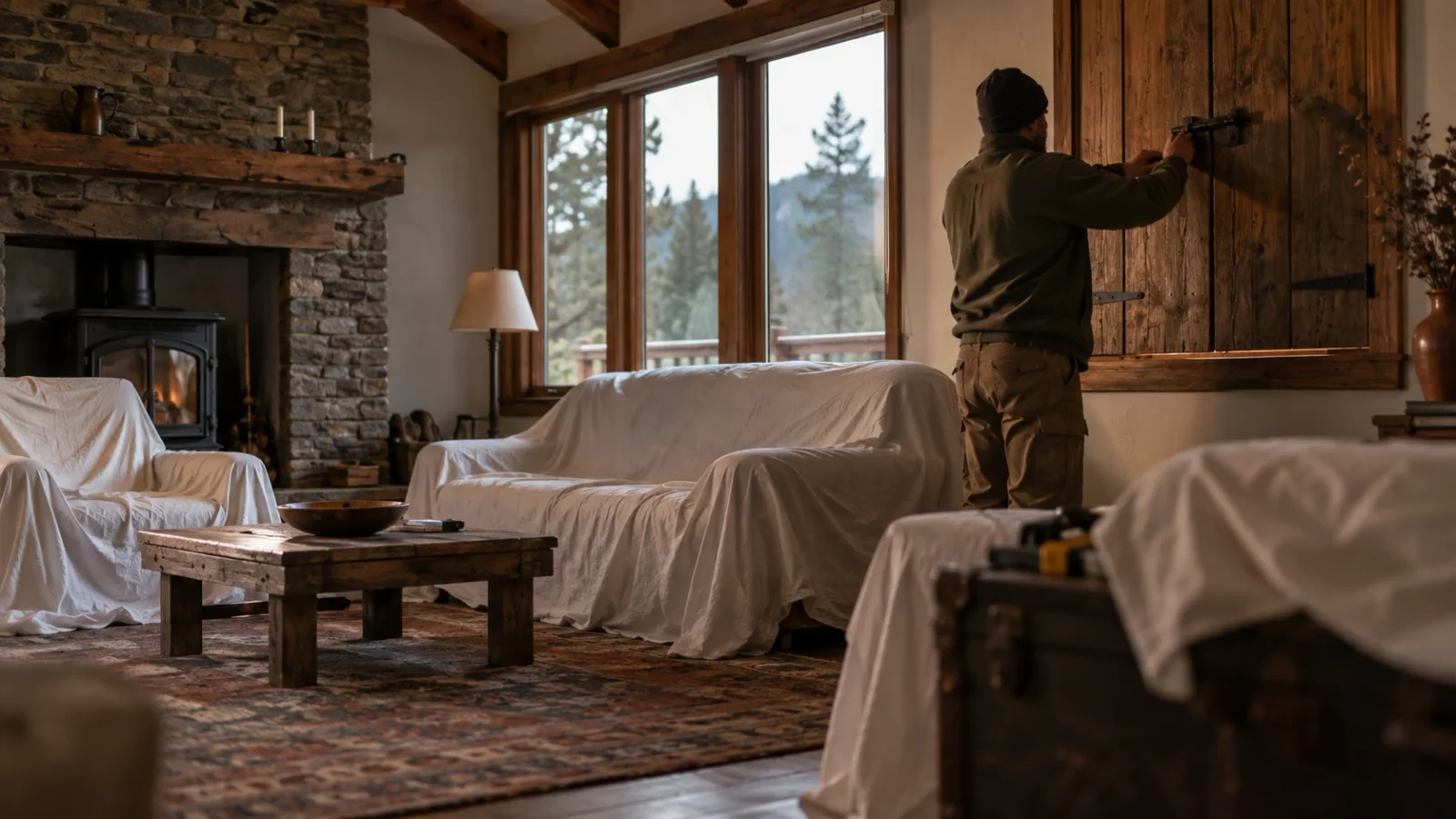
A seasonal closure is closer to commissioning the house into a different operating mode than leaving for a weekend. Water, traps, humidity, pests, selective power and access for a caretaker all need explicit decisions.
Closing a seasonal home starts with water
| Cadence | Action | Planning logic |
|---|---|---|
| Planning week | Choose heated-vacant versus full plumbing winterization and confirm insurer/utility requirements | The two strategies are not interchangeable. |
| Water system | If fully winterizing, isolate supply, drain per plumbing layout, and protect traps/toilets with appropriate non-toxic RV/marine antifreeze where called for | Do not use automotive antifreeze in plumbing. |
| Water heater | Follow manufacturer shutdown and draining instructions | Fuel/electrical isolation must be done correctly. |
| Food/pests | Remove food and trash; seal entry points and store fabrics/paper to reduce nesting | Vacant homes invite rodents. |
| Moisture | Control humidity with ventilation/dehumidification strategy appropriate to climate and available power | A closed building can mold even when pipes are safe. |
| Monitoring | Arrange inspections after storms/outages and keep emergency contacts/keys available | Vacancy length multiplies the consequence of unnoticed problems. |
A vacancy plan should include monitoring and access
- Insurance policy has vacancy restrictions you have not checked.
- You cannot fully drain a branch of plumbing.
- Building loses heat frequently.
- Known roof/drainage leak remains open.
| Heated vacant | Full winterization | |
|---|---|---|
| Main approach | Keep the home conditioned and systems operating as planned. | Drain and protect plumbing systems as the layout and instructions require. |
| Key dependency | Reliable heat, power, and monitoring. | Complete system-specific draining and protection. |
| When to get help | Interconnected systems make a shutoff uncertain. | Wells, boilers, fire sprinklers, or unknown plumbing are involved. |
A closed house still needs a moisture and access plan
Once the potable-water system is safely winterized, protect traps, fixtures and appliances according to the plumbing and appliance instructions. RV/marine antifreeze may be used in some traps and systems, but it is not a universal substitute for proper draining and it must never be confused with automotive antifreeze. Complex wells, pumps, boilers, fire sprinklers or irrigation systems deserve professional winterization when the procedure is uncertain.
Then decide what the closed building will do with humidity. A damp house can develop mold even when the plumbing is protected, while excessive ventilation can introduce moist outdoor air in some climates. Remove food and trash, reduce pest entry opportunities, keep critical monitoring powered, and give a local caretaker access plus an emergency contact list. Before locking up, write the spring reopening sequence, including which valves and breakers should be restored slowly and which areas should be inspected for winter damage first.
- Photograph meter readings and the position of important valves before departure.
- Do not disable power to sump, alarms, heat or monitoring equipment that the closure plan depends on.
- Confirm insurer expectations for an unoccupied seasonal property.
- Before closingConfirm vacancy requirements, utilities, water plan, and emergency access.
- During vacancyCheck after storms or outages and record visits with dates and photos.
- If an alert occursUse the written scope and contact the appropriate service provider.
- Before reopeningFollow the restart sequence and inspect for winter damage.
Design the vacancy check around failures that can grow silently
A closed seasonal house needs a monitoring plan even after the water system is winterized. Decide which signals justify an in-person check: loss of power, indoor temperature outside the safe range for the systems left active, a water or humidity alarm, storm damage, or evidence of forced entry. If internet-connected devices are part of the plan, make sure you know what happens when the router or utility power fails; a silent app is not proof that the building is fine.
Give the local contact a short written scope. They should know where emergency shutoffs are, which exterior areas can be viewed safely, where keys are authorized to be used, and which contractor numbers to call. They should not improvise repairs on frozen plumbing, electrical equipment, roofs, or combustion appliances. Record each visit with a date and a few photos so spring reopening begins with a history instead of a six-month information gap.
Write the reopening checklist before you lock the door
Deep-freeze cabins differ from humid coastal seasonal homes. In one case freezing dominates; in the other, mold, corrosion, storms, and pests may be the larger shutdown risk.
Budget for both closing and reopening. A professional winterization may be worthwhile if one hidden pipe could cause extensive damage, while monitoring and periodic checks are ongoing vacancy costs.
Winterization of complex systems is often professional work
Full plumbing winterization, boilers, wells, fire sprinklers, gas systems, and electrical shutdowns can require professional work. Do not improvise antifreeze or compressed-air procedures on unknown systems.
Seasonal-home closure questions
What is the difference between leaving for two weeks and closing a house for winter?
A short trip assumes the house remains normally conditioned and most systems stay in service. A winter closure may require draining parts of the plumbing, protecting traps, shutting or reconfiguring selected utilities, managing humidity, food and pests, and creating a reopening procedure. The exact process depends on climate and systems. Do not apply a full drain-down casually to boilers, fire protection or equipment that needs water; use qualified guidance for complex systems.
Which plumbing traps need freeze protection after the supply is drained?
After the water supply and lines are handled appropriately, water can still remain in sink, tub, shower, floor-drain and toilet traps. In properties that will freeze, those traps may need an antifreeze product specifically approved for plumbing use and used according to label directions. Do not use automotive antifreeze. Toilets, appliances, pumps and specialty systems can need separate procedures, so build the winterization from the actual plumbing layout rather than a generic room list.
How should moisture and pest risks be handled in a closed seasonal home?
Remove food and trash, close pest entry points, keep the building dry and use a moisture strategy appropriate to the climate and available utilities. A dehumidifier only helps if it can drain reliably and power will remain on; excessive sealing can also trap moisture in some buildings. Arrange periodic inspections after storms or outages. Also check insurer requirements for vacancy or seasonal occupancy, because monitoring or winterization expectations can differ by policy.