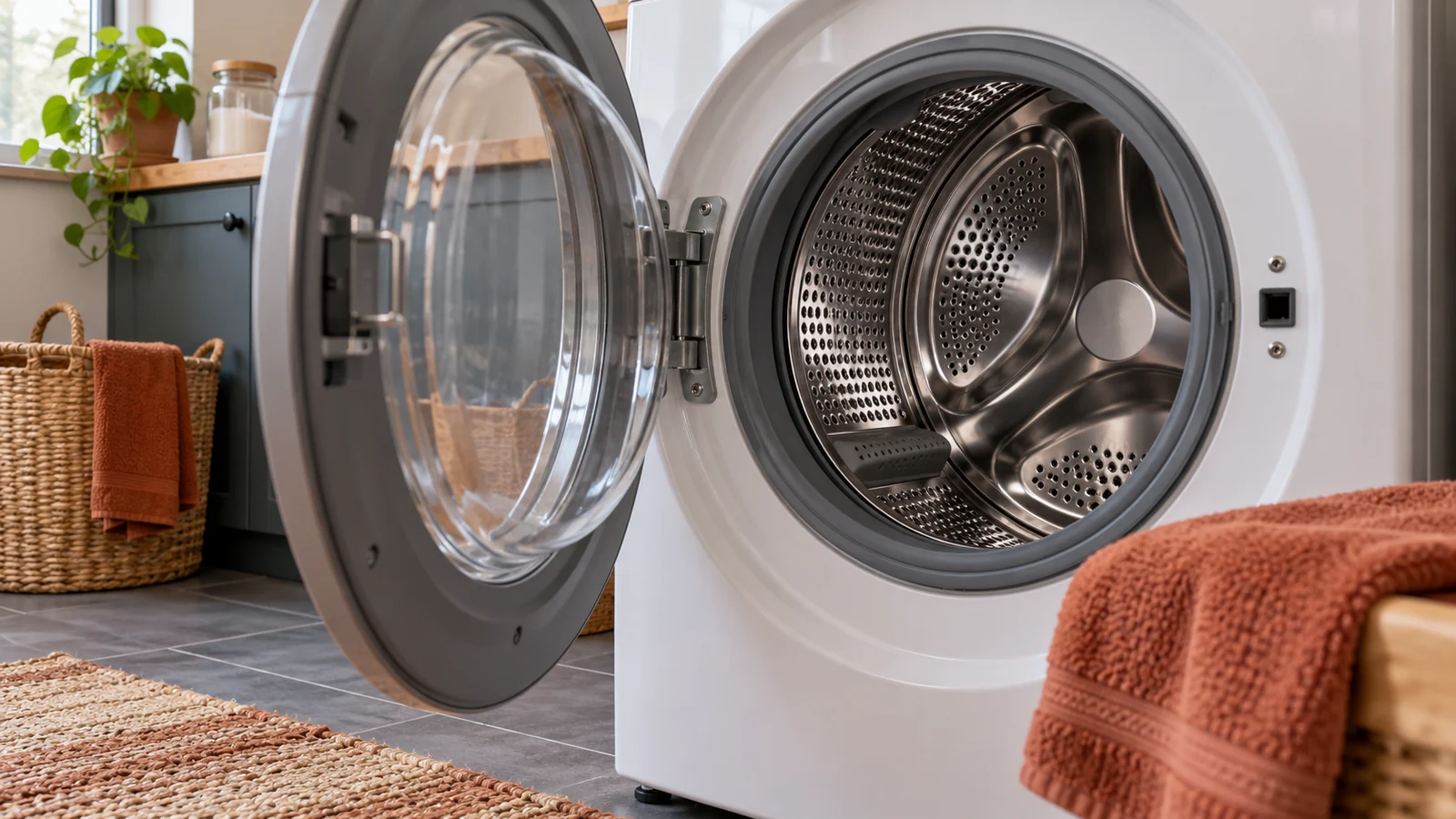
A washing machine handles a repeated mix of water, detergent, lint and motion, so its maintenance is less about a dramatic annual teardown and more about small checks at useful intervals. The exact routine changes by model: a front-loader may have a user-serviceable drain-pump filter and a door gasket that holds moisture, while many top-loaders do not have that same filter. Start with the model and serial number, download its use-and-care guide, and let that guide control any step involving panels, chemicals, hose removal or a special cycle.
The short schedule: after use, monthly, and quarterly
| Timing | Homeowner check | Why it belongs here |
|---|---|---|
| After laundry day | Remove the load promptly; leave the lid or door open when safe; wipe visible spills. | Airflow helps the interior dry instead of trapping damp fabric and residue. |
| About monthly or per the manual | Run the washer-clean cycle with the specified product; clean the dispenser and accessible gasket. | Many manufacturers use a monthly or 30-cycle rhythm, but cycle and product directions vary. |
| Quarterly as a reminder | Look over inlet hoses, shutoff connections, floor and nearby wall for wear or moisture. | A leak can damage finishes before a washer gives a clear fault code. |
| When symptoms appear | Check for residue, a blocked dispenser, poor draining, odor or a hose kink. | Symptoms can justify an earlier clean, but repeated faults call for service. |
Use the schedule as a prompt rather than a universal service interval. A two-person household that runs a few loads each week may reach 30 cycles much later than a family that washes daily. Whirlpool recommends a washer-clean procedure about monthly or every 30 cycles on applicable models, while LG describes monthly maintenance on its front-load line. Follow the specific machine’s cycle and cleaning-product label; do not assume a generic hot wash, bleach dose or vinegar treatment is safe for every finish, gasket and model.
After the final load: make drying easy
Take wet laundry out when the cycle ends, then leave the door or lid ajar if the room and household setup make that safe. Open a dispenser drawer only as far as the manual allows. This simple pause gives residual moisture a route out and makes it easier to notice a damp patch, loose item or unusual smell before it becomes a recurring problem. Keep children and pets away from an open appliance, and do not use the open door as a step or shelf.
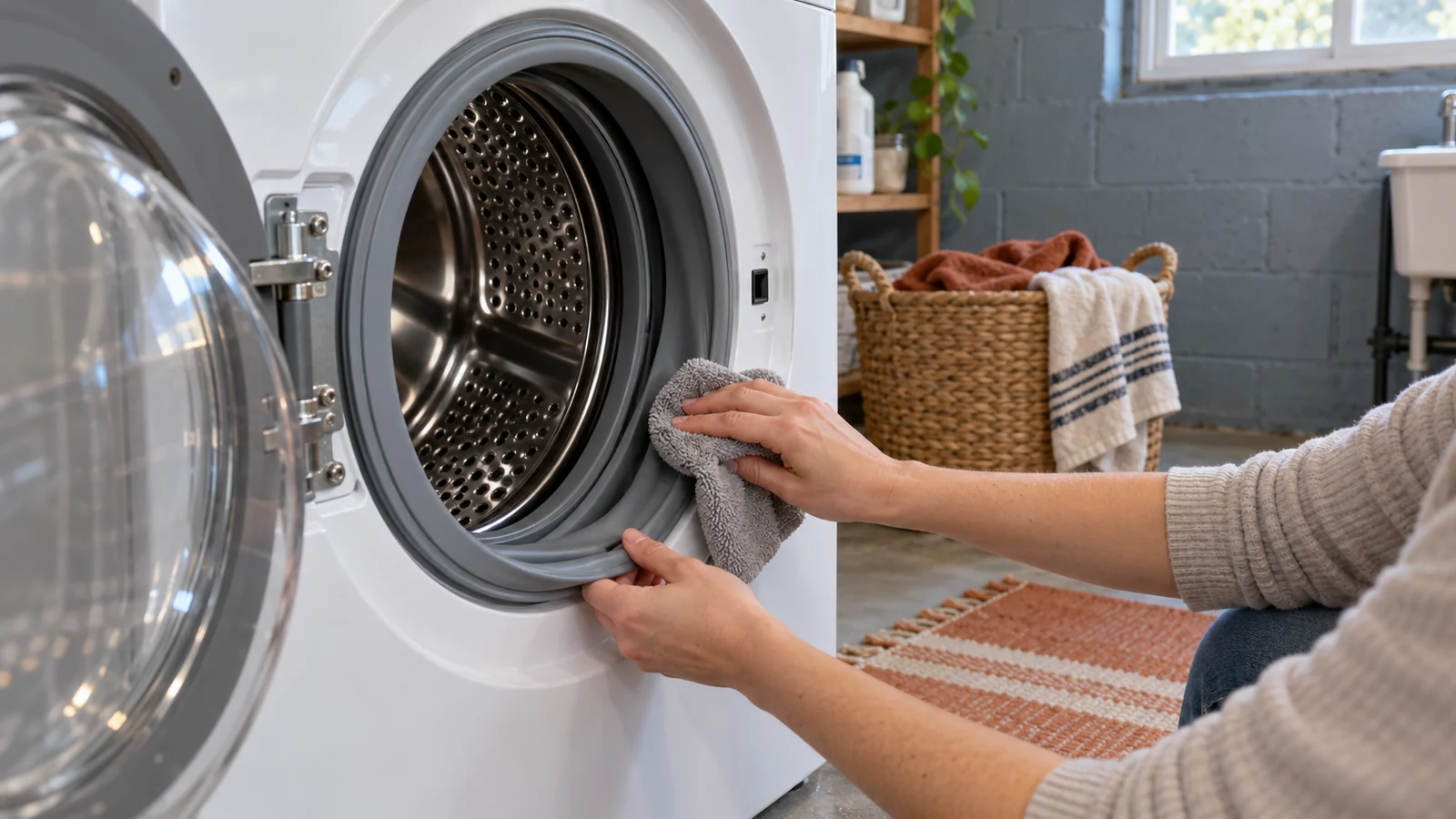
For a front-loader, inspect the visible folds of the door gasket for lint, hair, coins and pooled water. Wipe them with a soft cloth and the cleaner approved for that model; check that the gasket remains seated and has no tear. Do not stretch it aggressively or pour concentrated bleach, vinegar or another chemical into the fold. A cut gasket, recurring leak or mold that remains after the maker’s cleaning routine is a repair question, not a reason to scrub harder.
Monthly cleaning: separate the tub, drawer and gasket
Run the washer-clean or tub-clean cycle with an empty drum if the owner’s manual calls for it. Use the amount and placement specified by the appliance maker and the cleaner label, and let the cycle finish. LG’s current support guidance recommends a monthly tub-clean rhythm and ventilating the washer afterward; Whirlpool likewise describes about 30 days or 30 cycles on its supported machines. Those are useful examples, not permission to mix cleaning agents or to apply one brand’s directions to another brand’s model.
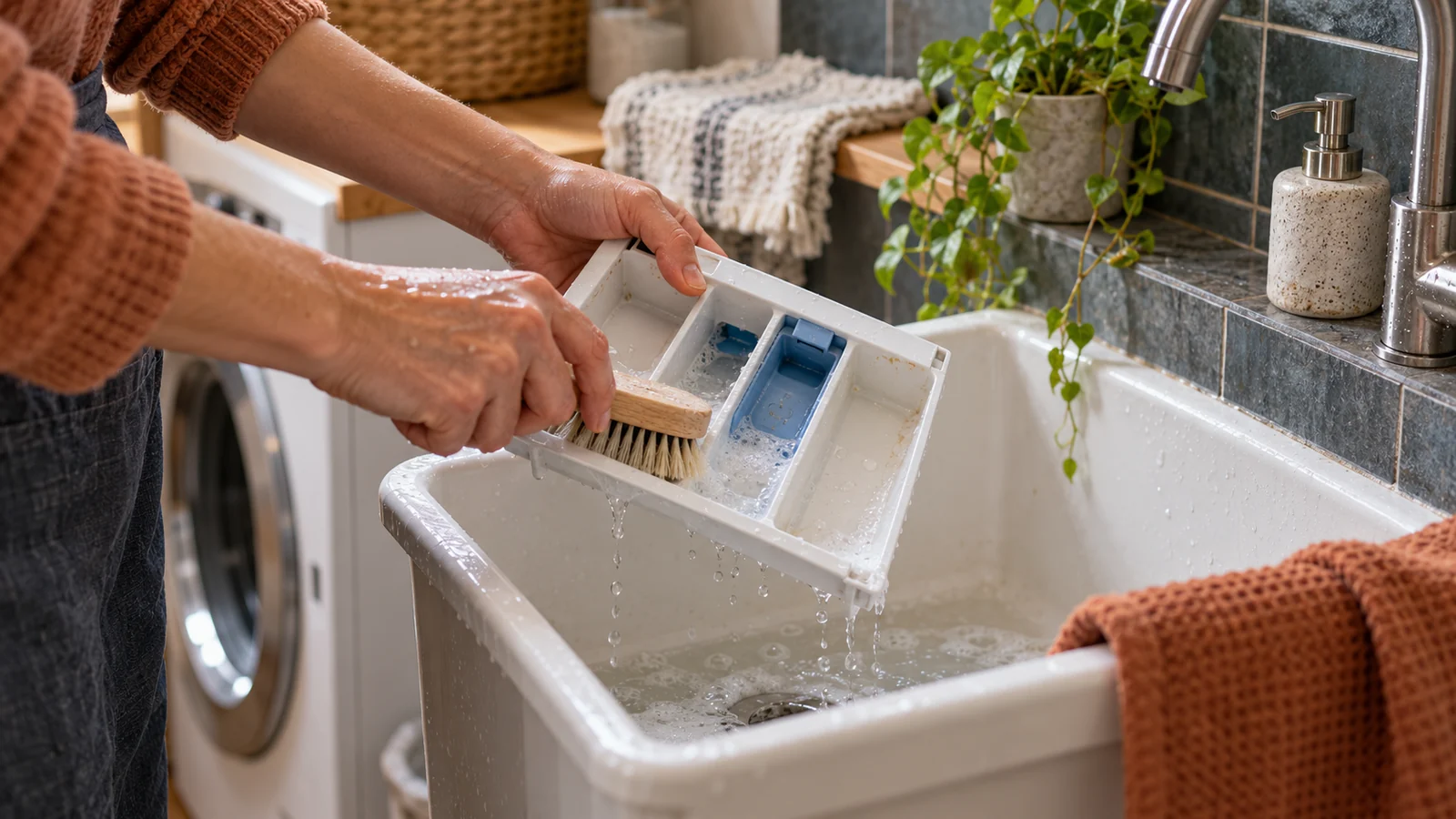
Clean a removable dispenser drawer over a sink with warm water and a soft brush. Remove only parts the manual says are removable, rinse away loosened residue, dry the pieces, and reinstall them in the correct orientation. A built-in reservoir or fixed trim should not be pried out. If detergent remains in the compartment after a cycle, check the dosage, drawer seating and product guidance; dried buildup can restrict flow, but a valve or control fault may require service.
When you finish, look around the drum opening and the floor beneath the machine. Record recurring odor, suds, residue or water rather than repeatedly changing cleaners. High-efficiency machines need the detergent type and quantity prescribed for their load and water hardness. Too much detergent can leave residue and oversudsing; using a cleaner cycle with clothing still inside defeats its purpose. Check the manual before using chlorine bleach or any commercial washer cleaner.
Front-load pump filters are model-specific
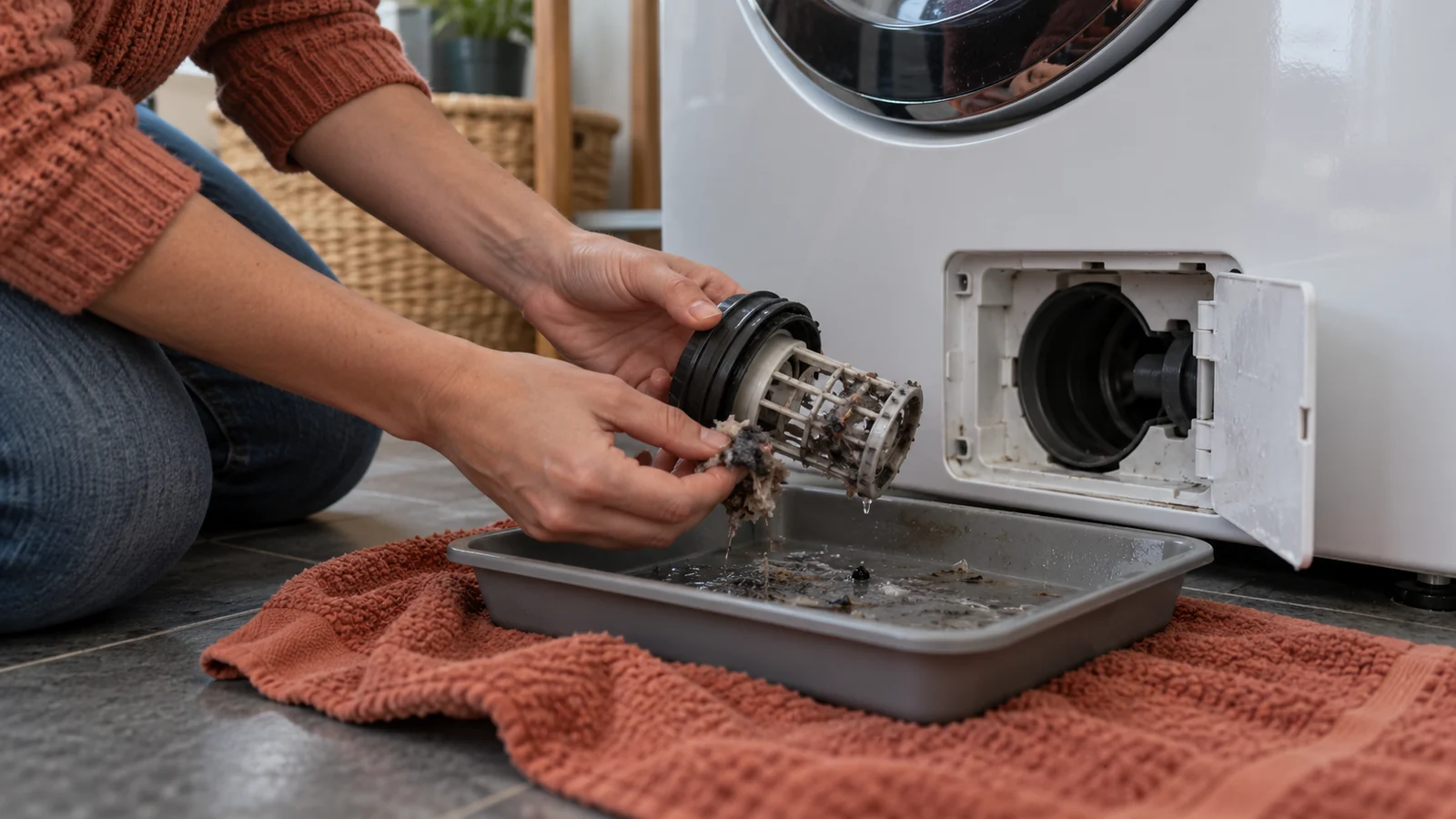
Some front-load washers have a small drain-pump filter behind a lower service door; many top-load washers do not. LG explicitly identifies the filter as a front-load feature on its support pages and recommends monthly cleaning for the models covered there. That does not establish a monthly interval for every washer. Check your own manual for the filter’s location, schedule and procedure before touching a panel.
If the manual does authorize owner cleaning, prepare for residual water: turn the unit off, disconnect power as directed, place a shallow pan and towel, and use the small drain hose if the model provides one. The water can be warm, and opening a filter before the tub is drained can spill onto the floor. Keep the cap, seal and filter oriented as designed; an incorrectly reseated filter can leak. If the access is stuck, the washer is full, or the steps do not match your machine, stop and arrange service.
A slow drain, repeated drain error, or water left in the drum can mean a filter needs attention, but a blocked household standpipe, kinked drain hose or failing pump can produce similar signs. Do not reach into a powered machine, defeat a latch or remove a pump assembly. Once an owner-approved clean is complete, inspect for leaks on the next cycle and note whether the symptom actually clears.
Inspect inlet hoses and water connections
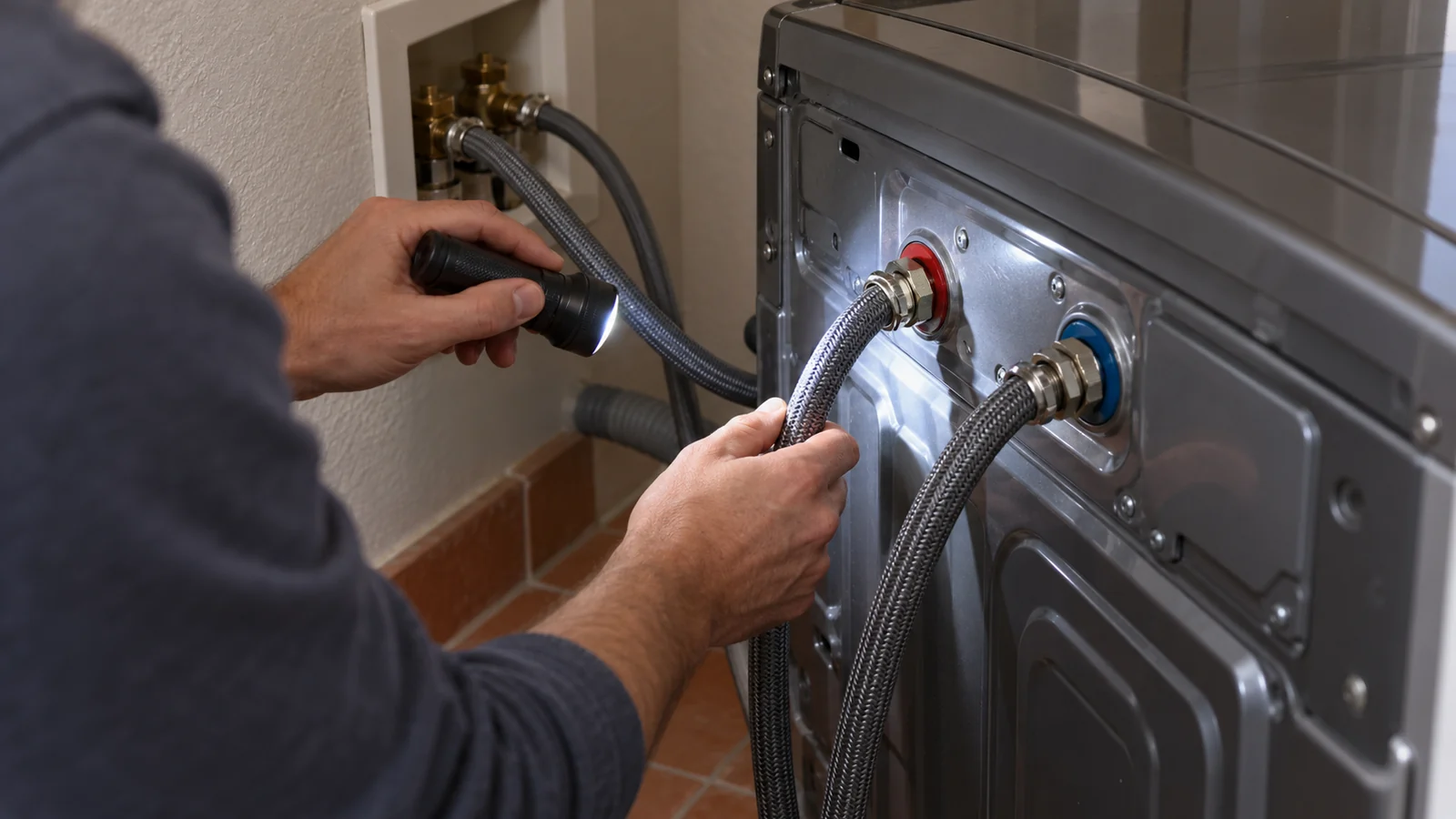
Every few months, use a flashlight to inspect the visible hot- and cold-water supply hoses and their connections. Look for bulges, cracks, fraying, kinks, corrosion at the fitting, dampness or a mark on the wall or floor. Whirlpool advises periodic inspection and replacement when wear or leaks appear; its manuals commonly call for replacing hoses after five years of use. Treat that interval as maker guidance for the applicable model and hose, not as a substitute for replacing a visibly damaged hose immediately.
If a hose is wet, badly worn, or the connection is leaking, turn off the accessible supply valves if you can do so safely and contact a qualified appliance professional or plumber. Moving a heavy washer to reach a shutoff can injure you or damage flooring. Do not tighten fittings blindly: over-tightening or disturbing a washer-side connection may create a worse leak. Date replacement hoses in your home records and check them again after installation.
Water-inlet screens can collect sediment, but cleaning them usually requires shutting off water and disconnecting hoses. Whirlpool and GE give model-specific steps, including unplugging the machine and managing water remaining in the lines. Use those procedures only if your manual authorizes homeowner access and you can safely reach the connections. If the washer is stacked, boxed in, or too heavy to move, leave the work to a technician.
Top-load and front-load differences that change the routine
- Front-load: check the door gasket and use only the serviceable pump-filter procedure listed for that model.
- Top-load: leave the lid open to dry when safe, check any model-specific lint filter, and do not look for a front-load pump door that is not present.
- Either type: clean the tub and dispenser on the manufacturer’s interval; use the correct HE detergent and amount where required.
- Any model: inspect the floor, supply connections and drain hose from an accessible position; do not defeat a lid lock or interlock.
A top-load impeller and a top-load agitator can also have different access and cleaning instructions. Fabric-softener cups, lint traps, dispenser inserts and self-cleaning features are not interchangeable across models. If the machine has a “clean washer” reminder or cycle, save a photo of the control panel and manual page in your maintenance record so another household member can repeat the right process without guessing.
Know when upkeep ends and repair begins
Stop and seek service for a burning smell, electrical shock or tingling, a tripped breaker that returns, water near an outlet, repeated unexplained leaks, a drum that will not spin, or a pump that remains noisy after the approved filter check. Unplugging a wet appliance is not always safe if you would have to stand in water or touch wet equipment; keep clear and shut off power at a safe, dry location only if you know how.
Make a short log with the date of each cleaning, hose replacement, error code and service visit. Include the model number, detergent used and a photo of any stain or leak. This record is practical when troubleshooting, supporting a warranty request, or deciding whether a repair is sensible alongside the age and condition of the washer. It also turns the recurring chores into a manageable row on your broader home maintenance calendar.
Washing machine maintenance questions
How often should I clean my washing machine?
Use the interval in your model’s owner manual. Several manufacturers recommend about monthly or every 30 cycles for a washer-clean procedure, but the correct cycle, product and parts to clean differ. Clean sooner if the maker’s alert appears or odor and residue return, and do not mix chemicals.
Do all washers have a drain pump filter that I should clean?
No. A user-accessible drain-pump filter is common on some front-load models, while many top-loaders lack that same service door. Check the exact model manual before looking for or opening a filter. Forcing a panel or following directions for another machine can cause a spill or a leak.
When should washer inlet hoses be replaced?
Inspect visible hoses regularly and replace any that are bulging, cracked, kinked, frayed or leaking. Some Whirlpool manuals specify replacement after five years of use for their covered models; hose materials and maker instructions differ. Record the installation date and use a qualified person if access is difficult.
Can I use vinegar and bleach together to clean the washer?
No. Never mix bleach with vinegar or other cleaning products. Use only the product and dosage approved by the washer manual, with the empty-drum cycle it specifies. If you are unsure whether a cleaner is compatible with the gasket or finish, check the model support page before use.