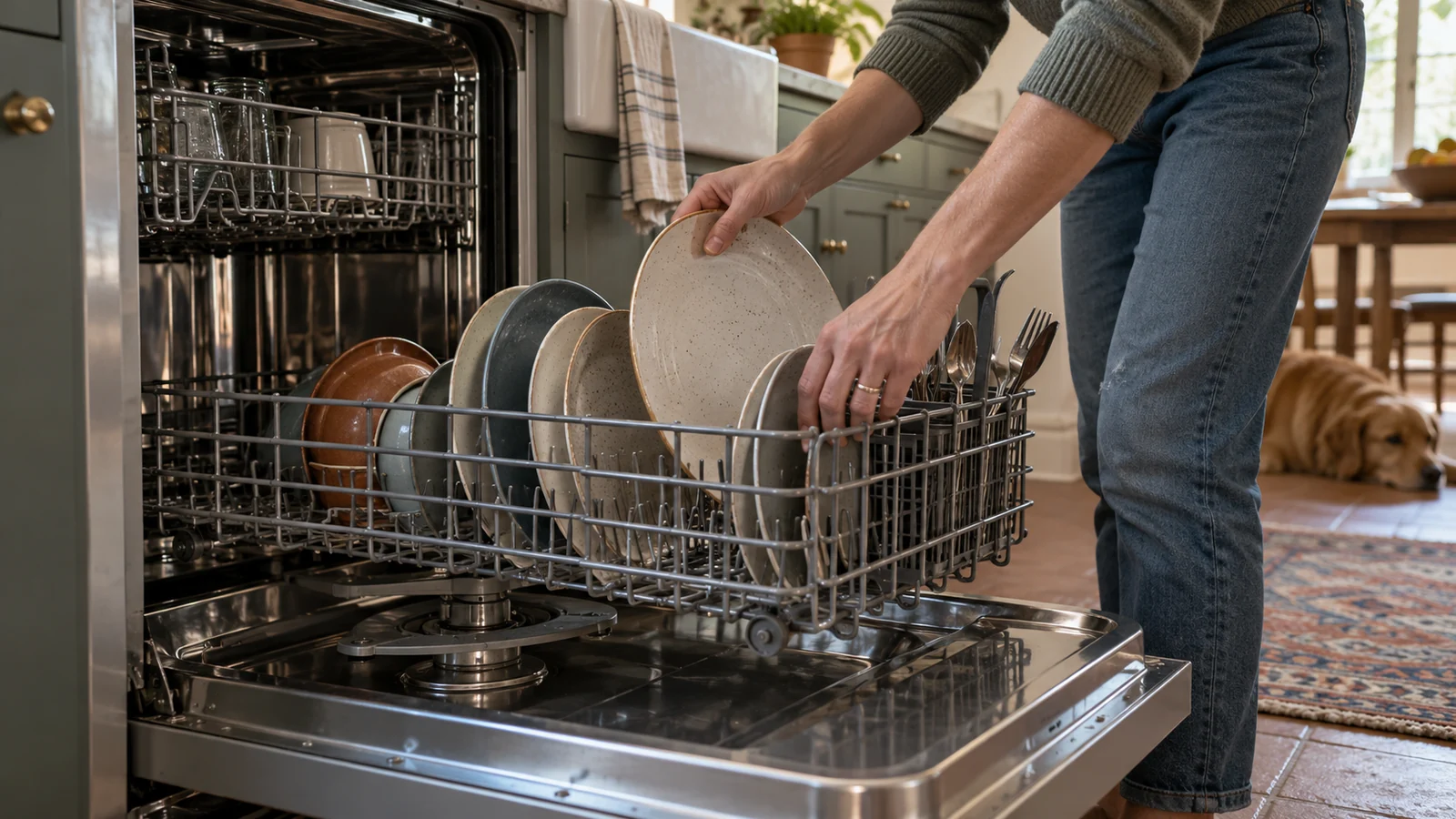
A dishwasher needs a modest routine, but the right routine depends on its filtration design and the way your household loads it. Some current machines have removable fine filters that need periodic rinsing; older or other models use self-cleaning filtration and may have no owner-removable filter at all. A filter-cleaning interval copied from a different brand can be unnecessary—or miss the part your own manual actually tells you to inspect. Start with the exact model number and use its owner guide for access, cleaner, cycle and maintenance instructions.
A simple schedule tied to use and visible symptoms
| Timing | What to check | Move it sooner when |
|---|---|---|
| After each run | Remove visible debris from the tub bottom; inspect the floor and nearby cabinet edge. | Water, grit or food remains after a cycle. |
| Every few weeks | Check spray-arm movement, accessible jets, racks and the door seal. | Dishes stay gritty or a jet is visibly blocked. |
| About monthly | Run a manufacturer-approved cleaning cycle or cleaner if the manual recommends it. | Odor, filming or mineral residue returns. |
| Every 1–3 months as a starting reminder | Inspect and clean a removable filter only at the interval your manual gives. | The filter looks soiled or wash performance drops. |
The table is a reminder to look, not a universal service schedule. GE says its fine and ultra-fine removable filters should be inspected and cleaned every other month or more often according to use, while its older and some current self-cleaning models may not have a removable filter. Whirlpool gives filter schedules that vary with soil left on dishes and weekly load count. The owner manual wins if its interval differs from either example.
After a load: scrape, unload, and notice what remains
Scrape large food pieces into the trash, but do not automatically pre-rinse every dish unless your appliance instructions call for it. Bosch advises scraping rather than rinsing so a small amount of food soil remains for detergent to work against. Do not put bones, pits, labels, glass fragments or hard debris into the machine. Check the tub bottom for anything the filter did not catch and remove it only when the dishwasher is off and cool.
After the cycle, look at the dishes as evidence. Grit on plates, particles redeposited on glasses, an unopened detergent cup, or a pool that remains in the tub can point to loading, a blocked spray arm, a filter, water supply or a mechanical fault. One imperfect load is not enough to diagnose a pump. Note what was loaded, the cycle used and whether the issue repeats before disassembling anything.
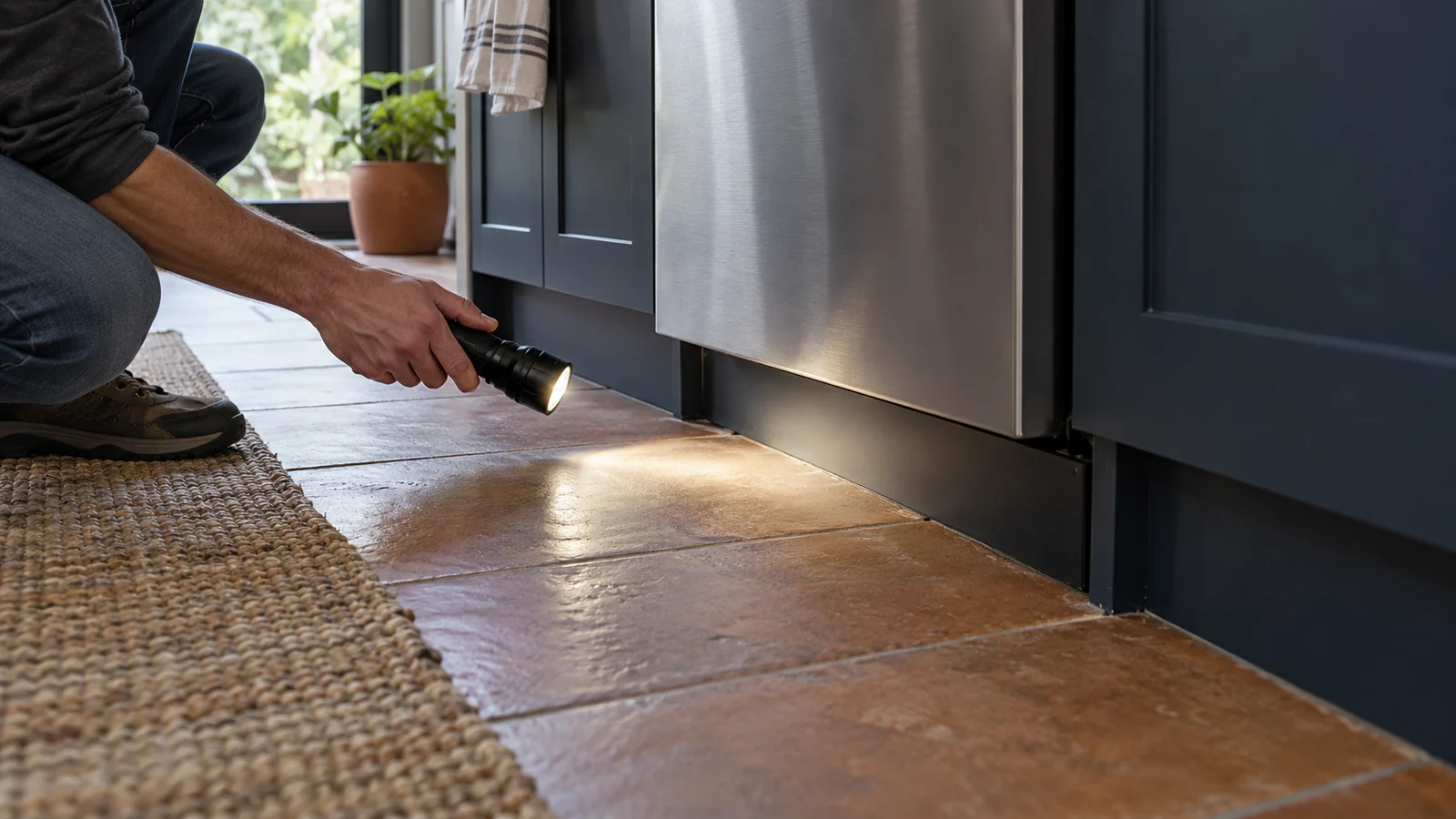
Take a quick look at the floor along the toe-kick and the cabinet sides next to the machine. Dampness, swelling, a fresh stain or a musty smell deserves prompt attention. If water is actively leaking, stop the cycle using the control if that is safe, keep clear of electrical hazards, and shut off the dishwasher supply at an accessible valve only if you can do so safely. Persistent leaks should be inspected by a qualified appliance technician or plumber.
Clean a removable filter without damaging it
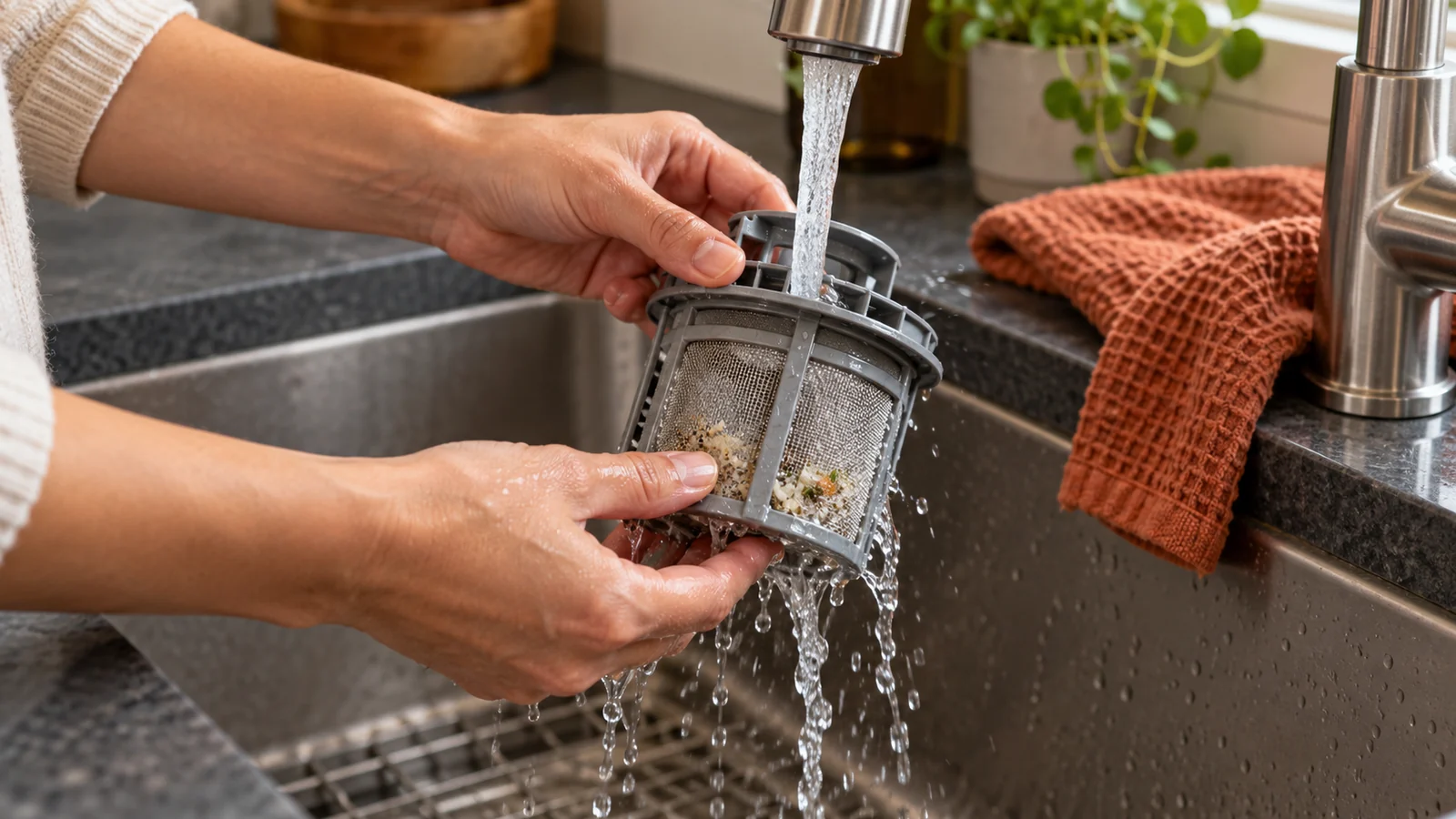
Confirm first that your dishwasher has a removable filter and find the model-specific removal steps. Some systems use a coarse cylinder and a fine mesh screen that lock together; others have different shapes or self-cleaning filtration. Remove the lower rack and spray arm only if the manual says to do so. Never pry up a fixed screen with a knife or screwdriver, and avoid running the appliance with a filter or cover left out.
For the removable assemblies that Bosch describes, the filter is at the bottom of the tub and is washed under running water with mild soap and a soft brush. Lift away food residue gently; a hard metal tool or abrasive pad can damage mesh and coatings. If a filter is greasy or scaled, use only the remedy authorized by the appliance maker. Rinse the parts, reinstall them in the correct direction, lock them as intended, and verify they sit flat before replacing the rack.
Use condition and use to adjust the reminder. A household that runs the machine daily and leaves substantial soil may need to inspect more often than a home that scrapes and runs a few loads weekly. Whirlpool publishes frequency examples based on soil and loading habits, but these are brand guidance rather than an industry-wide rule. If performance worsens between scheduled checks, inspect the accessible filter earlier and follow troubleshooting guidance before assuming a component has failed.
Check spray arms, racks, and loading clearance
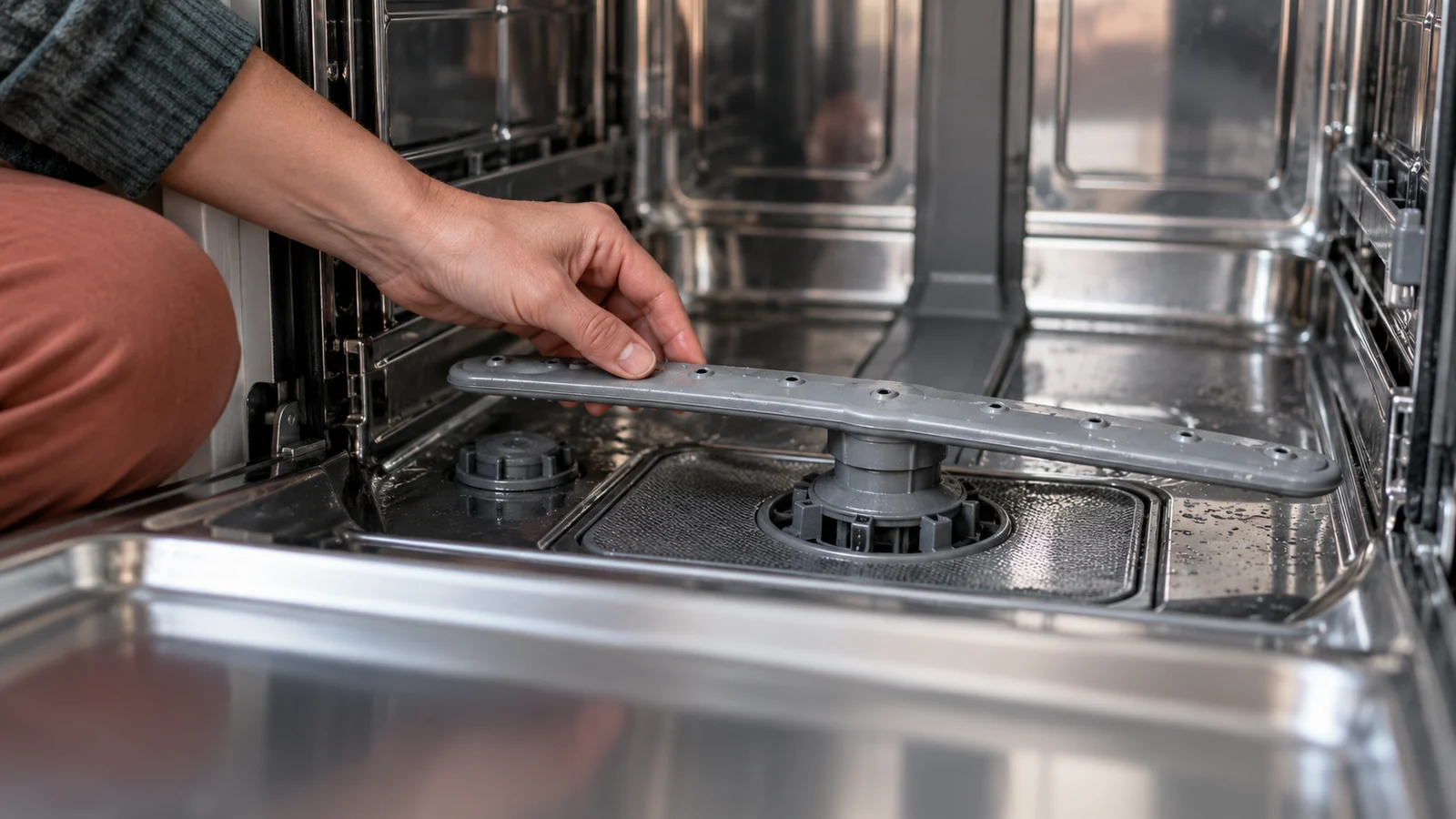
With the machine off, spin each accessible spray arm gently and make sure it can turn without catching a plate, utensil or tall pan. Inspect the small spray openings for visible debris. Bosch suggests rinsing an arm and loosening a blocked jet carefully with a toothpick; do not enlarge the opening or push debris deeper. A damaged, cracked or loose spray arm should be matched to the model and repaired as directed, rather than glued.
Load bulky pieces along the sides or rear as your manual shows, leaving the spray arms’ path clear. Keep utensils from falling through the rack and blocking an arm. Place cups and bowls so water can drain rather than collect in a recess. Correct loading is not cosmetic: if the spray cannot reach a surface, more detergent or a hotter cycle will not reliably solve the coverage problem.
If the dishes remain dirty, compare the same load after clearing obstructions and checking the accessible filter. Make sure rinse aid is filled if the manual recommends it and that the detergent cup is not blocked by a pan. If the arm does not rotate, the detergent cup stays closed, or performance remains poor through multiple cycles, follow the brand troubleshooting path or arrange service. Avoid removing a pump cover to investigate circulation.
Monthly interior, seal, and dispenser care
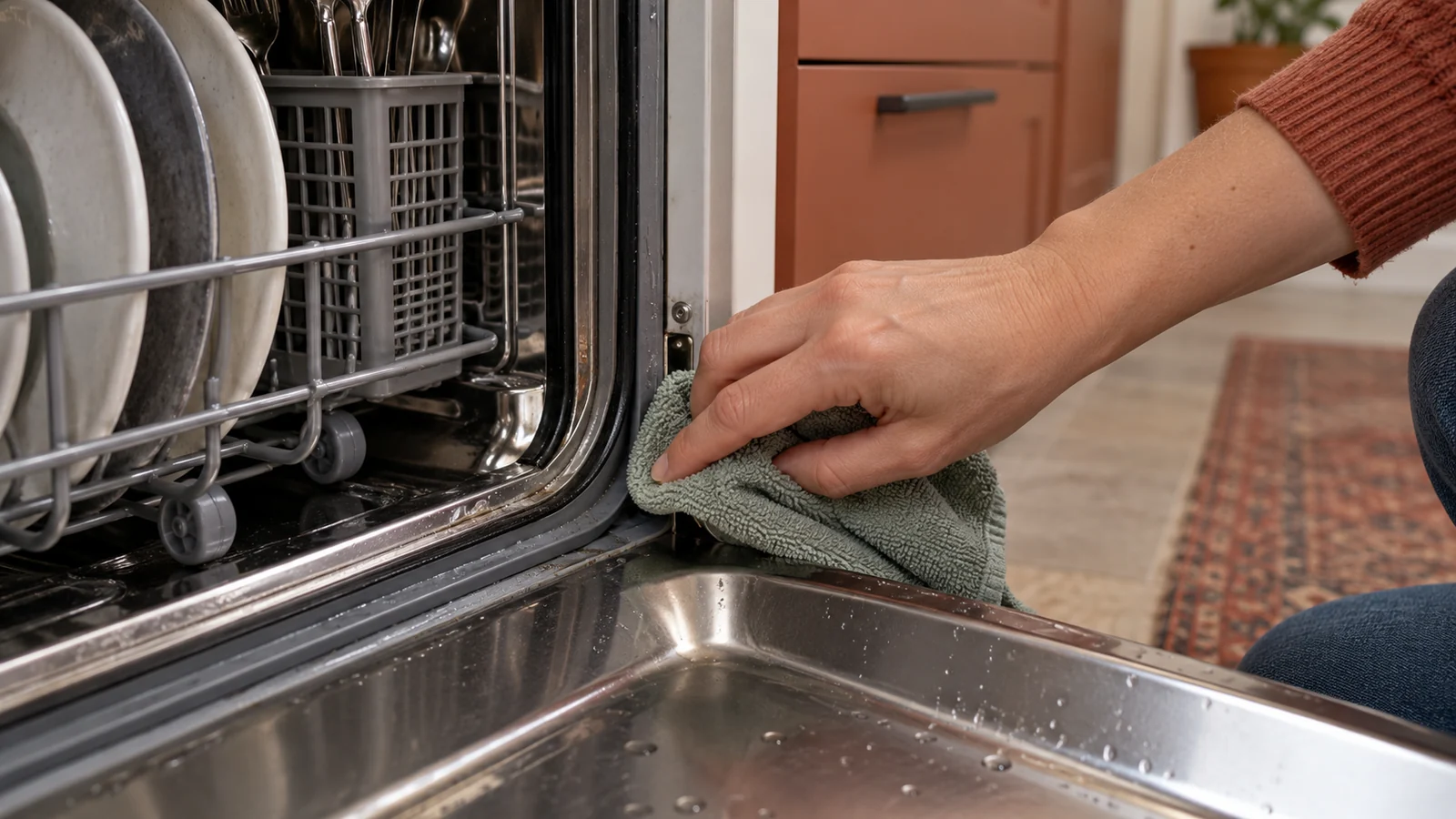
Wipe food specks from the tub, door edge and accessible gasket with a soft damp cloth. Use the cleaner approved for the material, and do not scrub a soft gasket with an abrasive pad. Check that the gasket is seated and free of a cut or hardened section. A worn seal or leak from behind the door is a repair issue. Do not spray cleaner into the latch or control panel, and do not remove a trim piece that the owner instructions treat as fixed.
For odor, mineral film or residue, check the manual for the approved dishwasher-cleaning product, dose and cycle. Whirlpool describes monthly interior cleaning on its general care guidance, while individual machine manuals can specify a different method or cleaner. Hard-water conditions and heavy use may change how often a clean is useful. Never combine cleaners, and avoid improvised vinegar, bleach or descaling treatments unless the manufacturer explicitly approves them for the model.
Wipe the detergent dispenser and the area around its lid if residue is visible. Keep rinse aid in the proper reservoir and use its indicator or manual to decide when to refill. If detergent remains in the cup, check that dishes do not block the lid and that the spray arms can move. Repeated residue with no obvious obstruction can indicate a water temperature, dispenser or mechanical issue; use the maker’s troubleshooting steps.
Water supply, drain path, and leak clues
From a safe, visible position, look under the sink where the dishwasher supply and drain connections are accessible. Check for a damp cabinet bottom, mineral trail, corrosion or a hose that has shifted. Do not crawl under a built-in machine, loosen a pressurized connection, or pull it from the cabinet to inspect the rear. A persistent drip or cabinet swelling is enough reason to call a professional before the flooring or adjacent cabinetry takes more damage.
If draining is slow, record whether water remains at the bottom after the cycle and check the manual for the filter and drain-area inspection you may perform. A small amount of water in a sump area may be normal on some models; compare with the maker’s support page instead of treating every wet spot as failure. Do not pour chemical drain opener into the dishwasher or force a tool into a pump opening.
If the dishwasher has a countertop air gap, inspect its visible cap for blockage only as the manual directs. Not every home has one, and local plumbing code and installation differ. Do not change an air gap, high loop or backflow arrangement as a casual maintenance step. A drain backup affecting the sink and dishwasher together can indicate a household plumbing issue rather than a dirty filter.
A useful maintenance log and service threshold
Keep the model number, owner manual, filter-clean date, cleaner used, water-softener notes if applicable, recurring error codes and service receipts in one record. A photo of the filter orientation before removal can help you reinstall it correctly, but follow the manual rather than relying on the photo alone. Note whether residue changes after cleaning; that makes a technician visit more informative and prevents repeated guesswork.
Call for service for an electrical smell, repeated breaker trips, water reaching nearby wiring, an active leak, a damaged cord, a broken latch, repeated drain errors or a spray arm that will not stay attached. Do not bypass the door lock or remove energized parts. Safe cleaning can protect performance and surface finishes; it cannot make a failing pump, valve, heater or control safe to keep operating.
Dishwasher maintenance questions
How often should I clean the dishwasher filter?
Follow your model manual. GE suggests checking certain removable fine and ultra-fine filters every other month or more often with use; Whirlpool frequency examples vary with weekly loads and how much food is scraped or rinsed. Inspect sooner when dishes become gritty or visible debris collects.
Do all dishwashers have a removable filter?
No. Some GE models use self-cleaning filtration and may have no removable filter, while many newer designs have serviceable fine filters. Find the instructions for the exact model before removing anything. Do not pry up a fixed screen or operate the machine with a filter assembly missing.
Should I rinse dishes before loading the dishwasher?
Bosch recommends scraping food rather than pre-rinsing on the models covered by its support guidance, because detergent is designed to work with some food soil. Remove large scraps and follow your model manual. Loading patterns, cycles and sensor behavior vary, so use the advice that applies to your machine.
What should I do if I find water beside the dishwasher?
Stop and assess the leak without touching wet electrical equipment. If safe, stop the cycle and close an accessible dishwasher supply valve. Photograph the moisture and call a qualified appliance technician or plumber for a continuing leak; do not pull the built-in appliance out or tighten a hidden connection yourself.