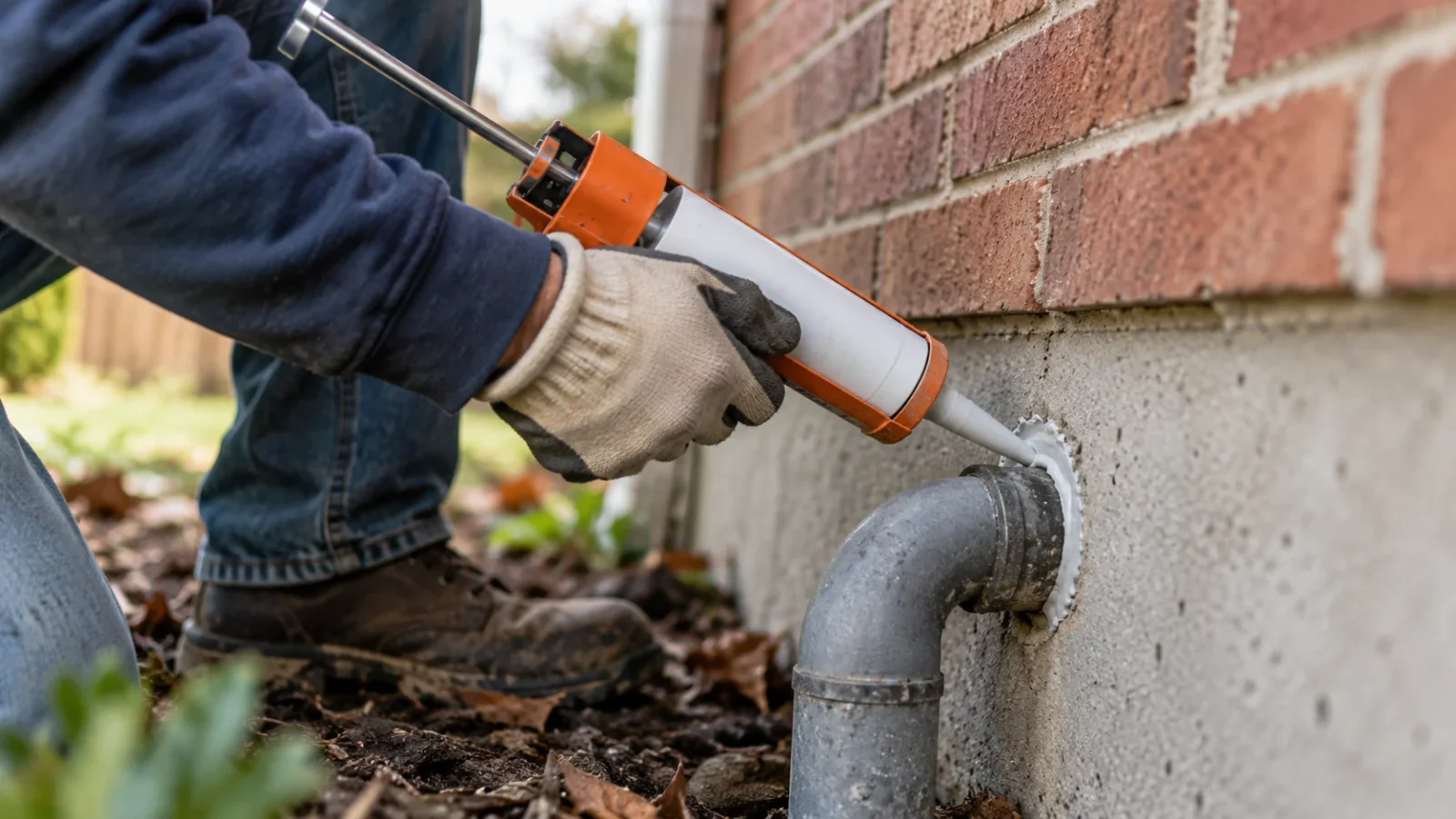
EPA integrated pest management starts with monitoring, identification and prevention. That fits a maintenance calendar better than routine spraying because you act on entry points, food, water and actual pest evidence.
Prevent food, water and shelter before reaching for pesticides
| Cadence | Action | Planning logic |
|---|---|---|
| Spring | Inspect utility penetrations, screens, foundation gaps, eaves, and early nests | Winter movement and spring activity reveal entry points. |
| Early summer | Reduce standing water, maintain screens, and keep vegetation off siding/roof | Warm weather increases insect activity. |
| Termite/swarm season | Learn local swarm timing and note wings/tubes or wood damage rather than spraying blindly | Evidence should guide inspection. |
| Fall | Seal rodent-sized openings with durable materials and trim branches touching the roof | Rodents seek shelter as temperatures fall. |
| Winter | Inspect stored food, attic/crawlspace signs, traps/monitoring points, and garage door seals | Indoor evidence is easier to see when exterior activity is lower. |
| Year-round | Keep firewood and clutter managed and fix leaks | Food, shelter, and water drive pest pressure. |
Identify and monitor before choosing a control
- Repeated droppings appear in living areas.
- Wood damage or mud tubes appear.
- Stinging-insect nest is in a high-risk location.
- Rodent access involves wiring or structural damage.
Use a sightings log to decide whether prevention is working
Integrated pest management is easier when you know where and when activity occurs. Record the pest or sign, location, date, weather or seasonal condition, and what non-chemical correction you made: sealed gap, removed food source, fixed leak, trimmed vegetation, cleaned a drain, or changed storage. A repeated sighting at the same threshold or utility penetration is more actionable than a vague note that “ants came back.” It points you toward exclusion and moisture control before repeated pesticide use.
If identification is uncertain, the infestation is extensive, the pest can damage structure, or treatment involves products or locations you cannot manage safely, use a licensed pest professional and follow label requirements. The calendar should schedule inspection and prevention, not automatic chemical application. Local climate and species timing matter, so extension services and local public-health guidance can refine national seasonal cues.
- Identify the signRecord the pest or evidence, without guessing at an unknown species.
- Mark where and whenNote the location, date, weather, and season.
- Record prevention triedNote the gap sealed, leak fixed, food removed, or vegetation changed.
- Check for a repeatUse recurring location patterns to guide identification and next steps.
The best pest calendar is mostly prevention and observation
In spring, inspect foundation penetrations, screens, eaves and utility entries as activity increases. In summer, remove standing water where practical and keep vegetation from creating hidden damp contact with siding. In fall, focus on rodent exclusion before colder weather drives animals indoors. Winter is a good time to inspect stored food, garages, attics and crawlspaces for droppings, gnawing or nesting evidence because exterior activity may be lower.
Preventive work should follow confirmed pest pressure and the building conditions it uses: food, standing water, damp wood, clutter, or an entry gap. Close accessible openings with a material suited to that location, store food and waste securely, and correct leaks or drainage problems. Use monitoring to decide whether those changes worked before escalating to a control product.
- Keep photos or samples when safe so the pest can be identified correctly.
- Never use a pesticide in a way that conflicts with its label.
- Record where activity appears; repeated sightings in one area can reveal a moisture or entry problem.
Climate and local species change the calendar
Species and seasons vary dramatically by region. Use extension or local pest guidance for termite swarms, mosquitoes, ticks, scorpions, rodents, and overwintering insects.
Start the budget with exclusion, drainage, screens, storage, and sanitation. Recurring chemical service is less effective if the building continues to provide open entry and moisture.
Keep seasonal cues flexible. Termite swarms, mosquito activity, and rodent entry depend on species, temperature, rainfall, and region; use local extension or public-health guidance to refine the inspection window. The calendar is a reminder to look for changed conditions, not a promise that each pest appears in the same month everywhere.
Use licensed pest help when the species is uncertain, activity suggests structural damage, an inaccessible nest or contaminated area is involved, or the needed pesticide application is outside the label directions or your training. Ask for identification, the reason for the proposed treatment, and prevention steps that reduce the chance of recurrence.
Large nests, wildlife, significant termite activity, restricted pesticides, contaminated insulation, or infestations near electrical systems may require licensed pest/wildlife professionals and other trades.
Pest-prevention questions
Why does pest prevention change by season?
Because pest pressure follows food, moisture, breeding cycles and weather. Spring can reveal insect emergence and water-related activity; summer often increases outdoor insect traffic; fall drives rodents and other pests toward shelter; winter makes indoor signs easier to notice. A seasonal calendar helps you inspect the likely entry points before pressure peaks. The actual timing moves by climate, so observations around your property are more useful than a fixed national date.
How small can an exterior opening be and still deserve attention?
Treat even small gaps as worth evaluating when they lead into wall cavities, attics, crawlspaces or food-storage areas. Different pests can use surprisingly small openings, so avoid relying on one universal hole size unless you are targeting a known species. Focus on durable exclusion: repair screens, seal appropriate penetrations, add door sweeps and correct gaps while preserving required drainage and ventilation paths. Do not seal an active infestation into the structure.
When do pest signs call for professional identification instead of more sealing?
Repeated droppings after exclusion, mud tubes, structural wood damage, large stinging-insect nests, unusual odors, wildlife in attics, or signs you cannot identify are good reasons to get professional identification. Correct identification matters because treatment and exclusion differ by species. More caulk is not a diagnosis. Also address moisture, food and vegetation conditions that are attracting pests so exclusion is not the only layer of control.