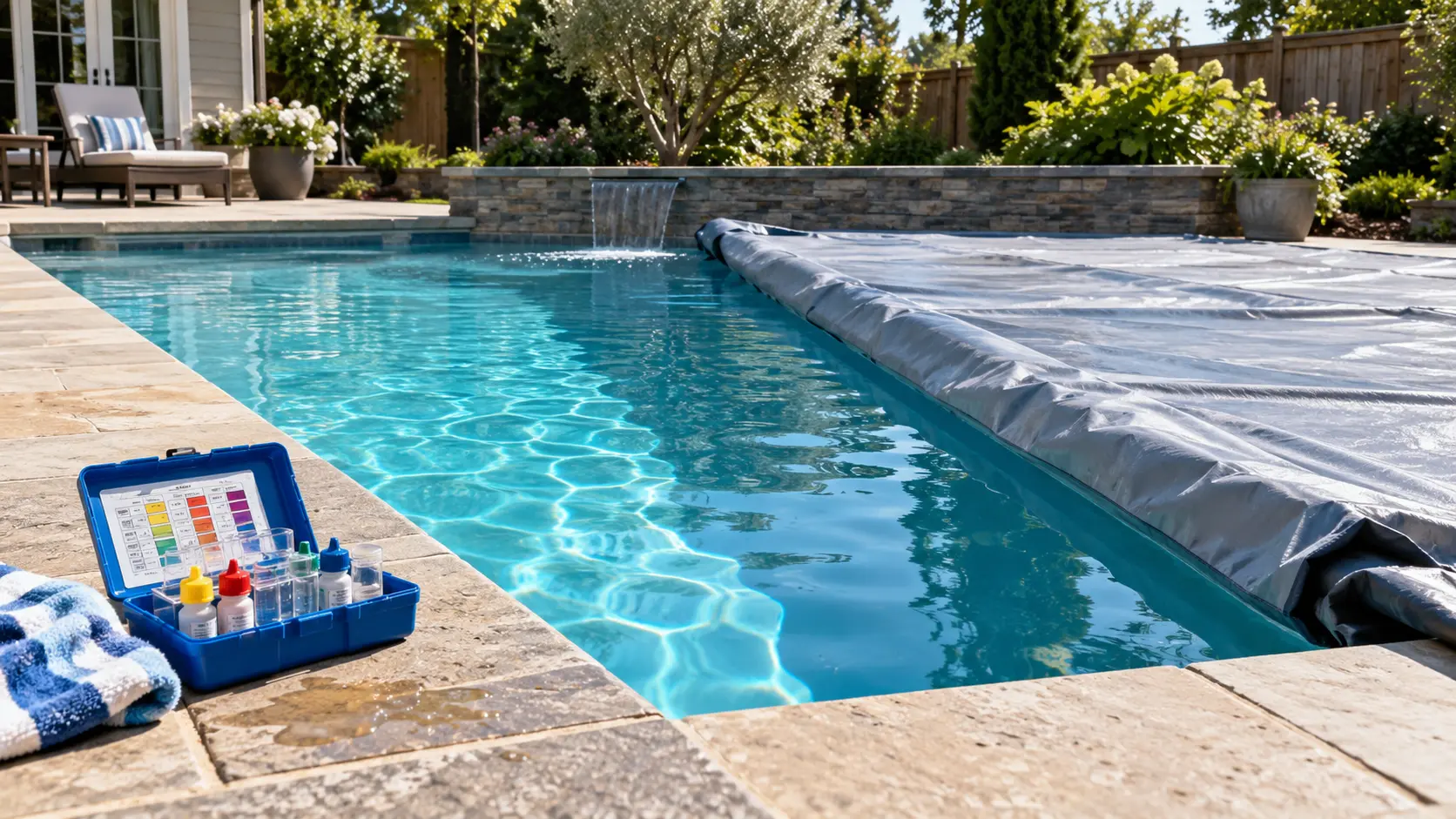
Opening and closing are equipment and water-quality transitions, so use the pool and component manuals to set the sequence and timing. Above-ground and in-ground pools, salt systems, heaters, filters and climates differ; a generic checklist cannot replace the model instructions or local freeze conditions. Photograph the equipment and note which plugs, unions and fittings were removed at closing so spring startup can verify each connection before power is restored.
Spring opening: the general sequence
- Remove and clean the winter cover, letting it dry fully before storing it to prevent mildew.
- Restore the water level to normal operating height if it dropped over winter.
- Reconnect and inspect all equipment — pump, filter, heater — checking for cracks or damage from freeze cycles before running anything.
- Run the filtration system and check for leaks or unusual noises before assuming everything survived winter intact.
- Test and balance water chemistry (pH, chlorine or sanitizer level, alkalinity) once the system is circulating, rather than testing stagnant winter water.
- Clean the pool surface, skimmer baskets, and any visible debris before the water is fully balanced and ready for use.
Fall closing: the general sequence
- Balance water chemistry one final time before closing, since improperly balanced water can cause scaling or corrosion over the winter months.
- Lower the water level as appropriate for your specific pool type and climate (consult your pool's manual, since over-draining can cause its own structural problems).
- Clean thoroughly before covering, since anything left in the pool over winter becomes much harder to deal with once it's covered.
- Winterize equipment appropriately for your climate — in freeze-prone areas this generally means draining lines and protecting equipment from ice damage.
- Install the winter cover securely, checking it periodically over the off-season if accessible.
Timing relative to weather, not the calendar
Spring opening timing depends heavily on your local climate — opening too early in a region with lingering hard freezes risks damage to equipment that's already been reconnected, while opening too late in a warm climate means dealing with algae growth in neglected water. Fall closing should happen before your area's first hard freeze, not on a fixed date, since freeze timing varies significantly year to year even within the same region.
Do not mix chlorine products with acid or combine different pool chemicals. Use protective equipment, ventilation, and each product’s instructions.
Chemical handling safety — this part has real official guidance
CDC says to read the label and safety data sheet, wear the protective equipment specified, open only one container at a time, and never mix pool chemicals with each other or with another substance. Never mix chlorine with acid. Only pre-dissolve when the label directs it; if directed, add chemical to water, never water to chemical. Keep containers labeled, dry, secured from children and pets, separated from incompatible products, and stored under the manufacturer’s temperature and ventilation requirements. If there is a spill or strong fumes, leave the area and follow the label’s emergency directions rather than attempting an improvised cleanup.
Why this guidance matters even for a small residential pool
The opening checklist should end with a safety check, not merely clear-looking water: restore required barriers and a self-closing, self-latching gate; inspect the cover and access points; keep rescue equipment available; and confirm circulation and water chemistry before swimming. A pool cover is not a substitute for a barrier or active supervision. If a drain cover is loose, missing or damaged, keep swimmers out until it is repaired by a qualified pool professional.
If you hire a pool service for opening and closing rather than doing it yourself, ask specifically what their process covers at each visit — some services offer a bare-minimum open/close while others include a full equipment inspection, and the price difference often reflects that scope difference rather than being purely a markup. Getting a written summary of exactly what was checked and adjusted at each seasonal visit also gives you a useful record if a problem shows up later and you need to figure out whether it existed before or after the service call.
Keep a simple written log of your opening and closing dates, chemical readings at each service, and any equipment issues found along the way. Over a few seasons this record becomes genuinely useful — it helps you spot a pattern (a pump that needs replacing every few years, a liner issue that keeps recurring) well before it becomes an emergency, and it gives any new pool service you hire a clear history to work from instead of starting blind.
When should I open my pool in spring?
Timing depends on your local climate rather than a fixed calendar date — opening too early in a region with lingering hard freezes risks damaging equipment that's already reconnected, while opening too late in a warm climate means dealing with algae growth in water that's been neglected too long.
When should I close my pool for winter?
Close before your area's first hard freeze, not on a fixed date, since freeze timing varies meaningfully year to year even within the same region. Balance water chemistry, clean thoroughly, winterize equipment appropriately for your climate, and secure the cover as the general sequence.
What's the most important pool chemical safety rule?
Per CDC guidance, never mix chlorine products with acid or mix different pool chemicals together, since this can create dangerous gas. Open only one chemical container at a time, use protective equipment like goggles and gloves, and ensure good ventilation wherever chemicals are stored and handled.
Should I hire a professional for pool opening and closing?
Many homeowners do, particularly for the equipment inspection and freeze-damage checks that require some technical familiarity. If you hire a service, ask specifically what each visit covers, since scope varies meaningfully between a bare-minimum open/close and a full equipment inspection.
What can go wrong if you skip a season
Occasionally a homeowner skips a proper opening or closing — leaving a pool covered and untouched over an unusually busy season, for example — and this tends to compound problems rather than simply delaying them. Water left stagnant and chemically unbalanced for an extended period can damage a liner, encourage algae growth that becomes much harder to remove the longer it's established, and in freeze-prone climates can risk equipment or plumbing damage that a normal winterization would have prevented.
Keep spare basic supplies on hand year to year rather than buying everything fresh each season, since test strips, a basic skimmer net, and a small stock of common chemicals used at both opening and closing rarely go to waste and save a scramble if you discover you are missing something the day you planned to open or close.
If you do end up returning to a pool that missed a proper seasonal service, budget for a more involved reopening than usual, and consider having a professional assess the water chemistry and equipment condition before you assume a standard opening routine will be sufficient. Treating a skipped season the same as a normal one is a common and costly mistake, since problems that would have been caught and addressed at a normal opening or closing tend to have progressed further by the time you notice them.