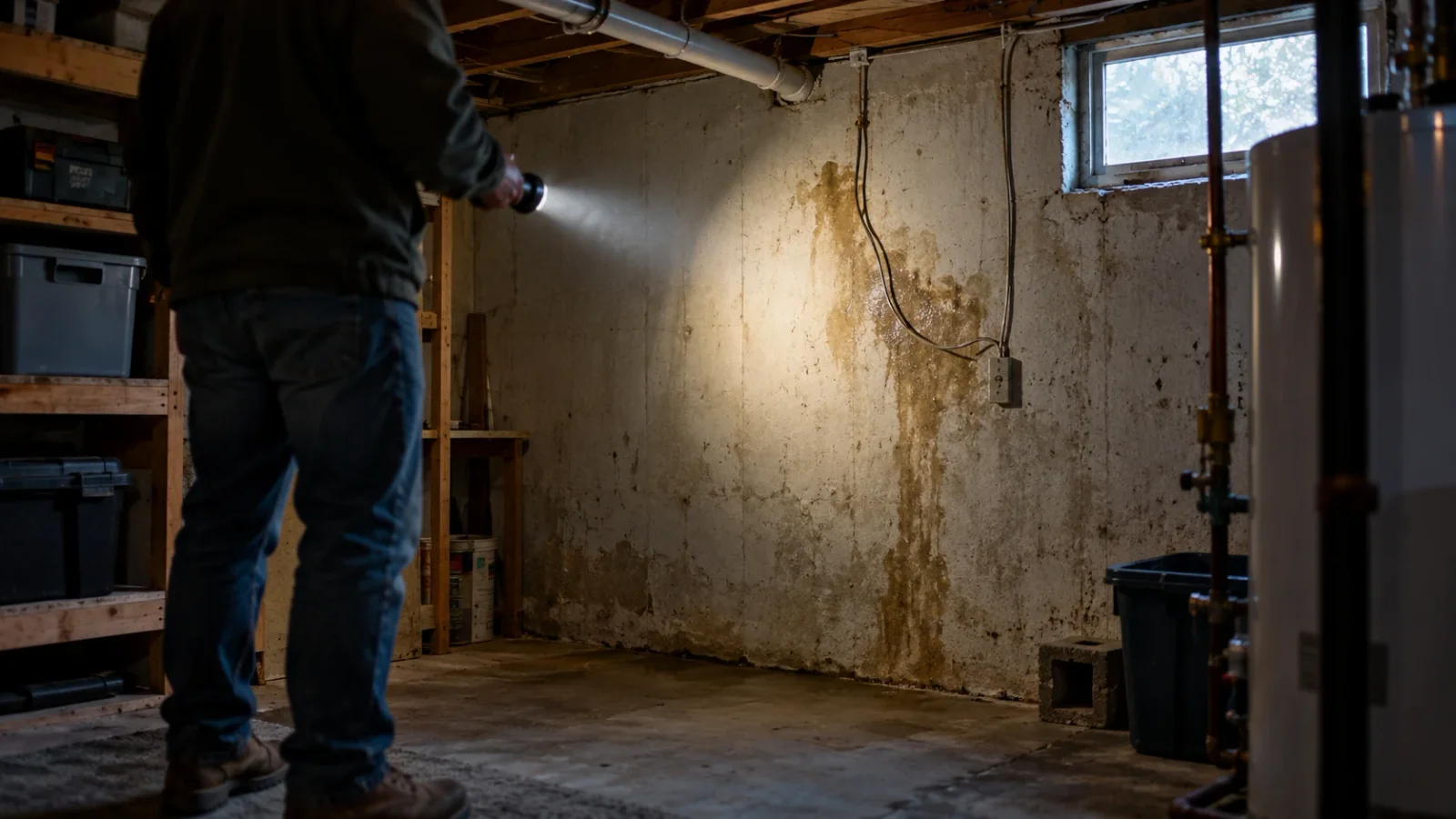
Do not begin with the ugliest room. Active water entry, unsafe electrical or gas conditions, structural movement and failing life-safety equipment outrank paint, flooring and other cosmetic catch-up work.
Triage by consequence, not by appearance
| Window | Maintenance checkpoint | What changes the date |
|---|---|---|
| Priority 1 | Active roof/plumbing leaks, failed drainage, standing water, foundation inflow | Water compounds damage quickly and supports mold. |
| Priority 2 | Electrical hazards, gas/combustion concerns, missing alarms, unstable stairs/rails, structural movement | Safety defects outrank appearance. |
| Priority 3 | Heating/cooling, water heater, sump, major appliances at failure risk | Mechanical failures can make the house unusable or cause secondary damage. |
| Priority 4 | Gutters, sealants, exterior wood, paint, pests, attic/crawlspace moisture | Durability work protects repaired systems. |
| Priority 5 | Cosmetic flooring, cabinets, decorative paint, landscaping upgrades | These can wait if they do not create damage or hazards. |
| 12–24 month board | Give each item owner, quote, deadline, dependency, and stopgap | A visible sequence prevents random spending. |
Build a 12–24 month stabilization sequence
- Water is actively entering.
- Electrical heat/burning odor appears.
- CO or gas concern exists.
- Structural element moves or sags.
Make one table with four columns: problem, consequence if delayed, who should assess it and the target window. Put active roof or plumbing leaks, unsafe electrical or gas conditions, missing life-safety devices and structural movement at the top. Next come drainage defects and major systems that are failing or near end of life. Only after those are stabilized should worn finishes, outdated décor and other cosmetic work compete for budget.
Deferred maintenance often creates linked problems. A failed gutter may have damaged fascia, siding and soil grading; a long roof leak may have affected insulation and framing; a neglected HVAC system may have drainage as well as comfort issues. Do not price each symptom independently until the underlying cause is understood. Use qualified inspections for high-consequence areas, gather local quotes and sequence work so a cosmetic project is not demolished later to reach a problem that should have been repaired first.
- Reserve contingency because opening walls or removing damaged materials can reveal hidden work.
- Document “safe to defer” decisions with a review date instead of letting them vanish.
- Revisit the triage list after every major repair because fixing one system can change the priority of the next.
Structural, gas and electrical uncertainty belongs with professionals
Use licensed/qualified professionals for gas, electrical, structural, roof, chimney, major mold, and other hazardous work. Deferred maintenance often hides interactions that are not obvious to a new owner.
Defer cosmetics deliberately, not accidentally
Wet climates push drainage and rot higher; freeze regions add plumbing and roof ice; hot regions may move cooling reliability upward; wildfire areas add defensible-space and ember-risk work.
Do not split money evenly. Fund the highest-consequence item enough to actually solve it. A series of cheap cosmetic wins can make the house look better while expensive damage continues behind walls.
Once urgent water and safety problems are identified, map dependencies before scheduling cosmetic work. Roof and flashing repairs should precede interior ceiling finishes; drainage correction should come before replacing moisture-damaged basement materials; electrical or plumbing work hidden in walls belongs ahead of repainting; structural deck repair comes before staining. This sounds obvious, but deferred-maintenance houses often accumulate separate quotes that were never put into one sequence.
Give every deferred item a reason and a review date. “Wait until next spring because the defect is stable and dry” is a decision; “not urgent” with no revisit date is how problems disappear from the plan. Keep contingency for hidden damage and re-rank after each major project. Opening a wall, replacing a roof section, or correcting drainage can reveal new information that changes the next six months of priorities.
For each item, distinguish the observed symptom from the suspected cause. “Ceiling stain” is evidence; “roof leak” is a diagnosis only after the source is traced. Photograph the condition, note when it changes, and keep inspection findings or written estimates with the priority list. If a safety issue is possible, restrict access while awaiting qualified assessment. Then sequence work around a small number of practical windows—urgent stabilization, weather-dependent exterior repairs, and interior restoration after the source is controlled—so the plan responds to both risk and season.
- List what must be repaired firstPut active water, safety, and structural work ahead of finishes.
- Name work that could be damagedCheck whether later plumbing, electrical, roof, or drainage work affects a finished surface.
- Set a review date for deferred itemsRecord why a stable item can wait and when to reassess it.
- Re-rank after each repairNew information can change the next project and budget.
Deferred-maintenance questions
What should come first in a house with years of deferred maintenance?
Start with active water entry and life-safety hazards. Roof or plumbing leaks, failed drainage, unsafe electrical or gas conditions, missing smoke/CO protection, structural instability and heating problems in severe weather outrank worn finishes. Next address systems that are actively failing or likely to create secondary damage. Cosmetic work comes later. This order is based on consequence: stop damage and safety exposure before spending money on surfaces that may be disturbed by repairs anyway.
Which ugly problems can wait while water and safety issues are handled?
Dated décor, scuffed finishes, worn cabinet hardware, faded but still protective coatings and other appearance issues can usually wait while leaks, unsafe stairs or rails, electrical concerns, drainage defects and failing mechanical systems are stabilized. Even ugly work should move up if it signals active moisture, rot or structural movement. The distinction is not 'pretty versus ugly'; it is whether delaying the item increases safety risk or allows expensive damage to continue.
How can I turn a long repair list into a 12- to 24-month plan?
Create a table with the defect, consequence if delayed, responsible trade or owner, estimated cost range, dependency and target window. Put urgent items in the first weeks, stabilization work in the next several months, and lower-consequence replacements into later quarters. Gather local quotes for the big items and keep contingency for hidden damage. After each major repair, re-rank the list because solving one cause can eliminate, expose or change the priority of several symptoms.