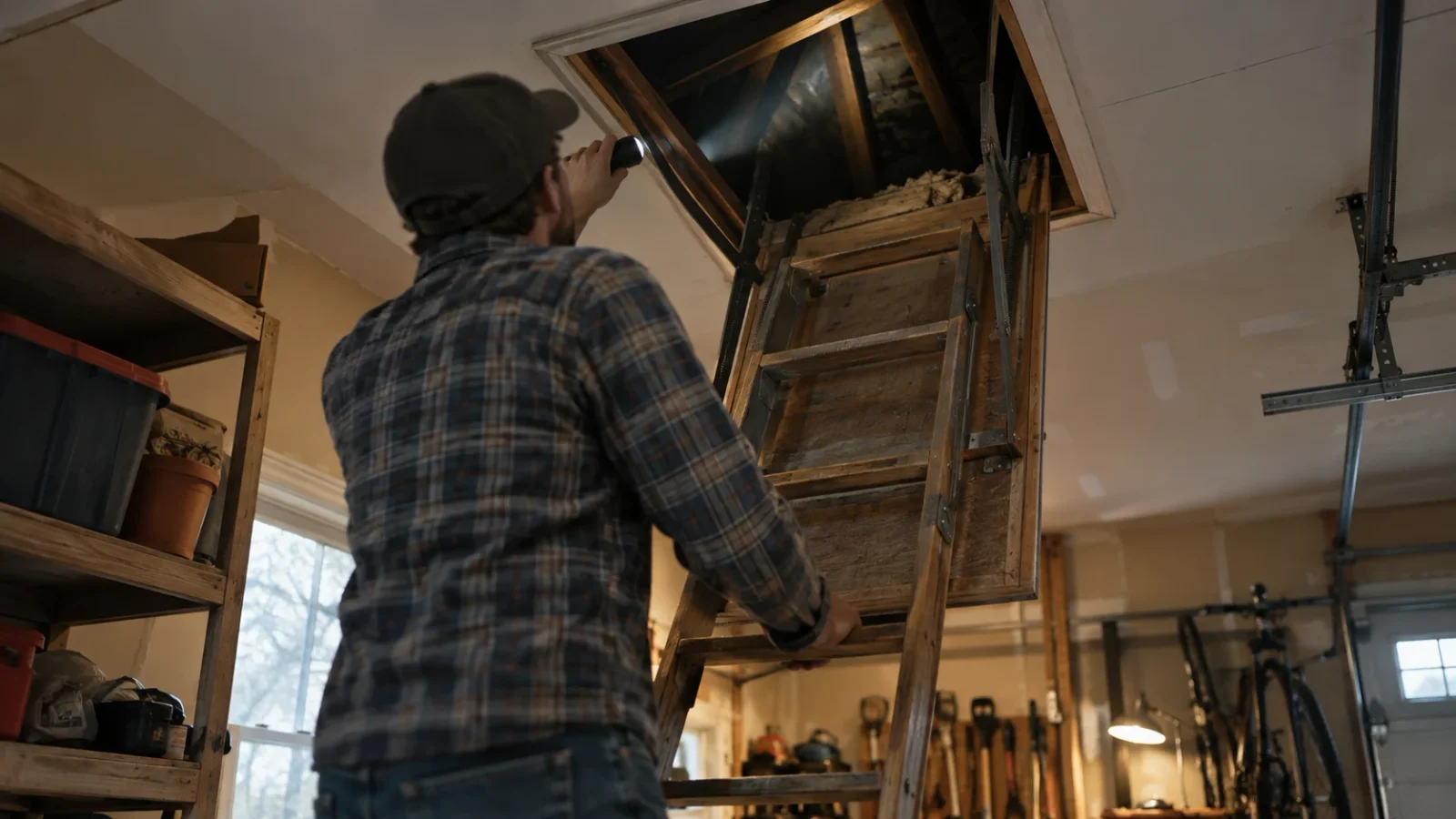
Pick safe access conditions and carry a light; then look before touching. Water stains, damp insulation, animal evidence, blocked vents and altered ducts often tell you more than a generic annual attic reminder.
- Fresh water stain or wet insulation.
- Visible fungal growth expands.
- Sagging/structural movement appears.
- Animal droppings or damaged wiring are present.
| When / trigger | What to do | Why it sits here |
|---|---|---|
| Spring or after wet season | Look for roof leak stains, damp insulation, standing water, and drainage changes | Wet weather exposes moisture paths. |
| Fall | Check insulation coverage, air leaks around penetrations, pest evidence, and vent blockage before heating | Winter condensation risk rises as temperature differences grow. |
| After major rain/wind | Compare previous photos around penetrations and roof deck | Event-triggered checks catch sudden leaks. |
| Crawlspace | Check vapor barrier condition, plumbing, ducts, supports, and pest signs without disturbing suspect materials | Crawlspace moisture affects the house above. |
| Attic | Keep bath/kitchen exhaust ducts connected to proper exterior termination | Dumping moisture into attic can create condensation and mold. |
| Record | Photograph the same 6–10 locations each time | Repeatable photos make subtle changes obvious. |
Look for patterns before you touch insulation or ducts
Enter only if access is safe, dry and structurally appropriate. Start with a bright light and scan for dark water trails, damp or compressed insulation, rusted fasteners, condensation on ducts or sheathing, blocked soffit paths, disconnected duct sections and animal evidence. In crawlspaces, also look at the ground vapor barrier, plumbing and whether water is collecting after rain. Photograph findings before moving anything so you do not erase the pattern.
Repeat after a major rain or large seasonal temperature change because some problems are event-driven. A dry stain that never changes is different from a stain that darkens after every storm. Frost on roof sheathing in winter can point to air leakage or ventilation issues, while wet crawlspace soil may trace back to grading or drainage outside. Exposed wiring, structural damage, suspected hazardous materials, standing water near electrical equipment or unsafe access are reasons to stop and call the appropriate professional.
- Wear appropriate basic protective equipment for dust and debris, but do not rely on PPE to make unsafe access acceptable.
- Do not compress or randomly relocate insulation just to “inspect” beneath it.
- Keep photos from the same areas so seasonal change is obvious.
Choose a handful of repeatable viewpoints near roof penetrations, plumbing runs, exterior corners, duct connections, and known low crawlspace areas. Photograph those spots after the wet season and again during the temperature conditions that have produced condensation in the past. Add a short note about recent rain, snowmelt, or humidity. That creates a moisture history without disturbing insulation or vapor-control layers simply to see what is underneath.
Recheck after weather, not only by anniversary
For each visit, log the date, recent rain or snowmelt, approximate outdoor conditions, the location of any new moisture and whether it changed from the previous photo. This separates a one-time old stain from a repeat leak and gives a roofer, plumber or drainage contractor a useful starting point. A home inspection is a visual snapshot, so revisit areas that were blocked or inaccessible when conditions make access safe.
Inspection costs little, but moisture remediation can be expensive. Early detection is the economic reason to visit these spaces before a ceiling stain forces the issue.
Unsafe access, wiring and structural movement are stop signs
Do not enter spaces with exposed live wiring, unstable access, suspected asbestos, heavy mold, sewage, animals, structural damage, extreme heat, or oxygen/air-quality concerns. Use qualified help.
A few common patterns help focus the next inspection without pretending to diagnose the cause. Moisture concentrated around a roof penetration after rain points toward the roof or flashing; droplets on cold ducts during humid weather may indicate condensation; a musty crawlspace after prolonged rain can track ground moisture or drainage. These clues narrow the questions to ask, but they do not prove a single repair. Check whether bath and kitchen exhaust terminate outdoors, whether downspouts discharge away from the foundation, and whether the condition changes with weather. Avoid pulling insulation away from wiring, disturbing animal waste or suspected hazardous material, or sealing ventilation openings until the assembly has been assessed.
- Choose repeatable viewpointsUse the same visible roof, duct, plumbing, and crawlspace locations.
- Add weather contextNote recent rain, snowmelt, or temperature change.
- Photograph before moving anythingKeep insulation and vapor-control layers undisturbed.
- Track changed evidenceA new stain or wet area can help route a qualified assessment.
Attic and crawlspace questions
When is the most revealing time to inspect an attic or crawlspace?
Inspect after a meaningful rain and during the seasons that create the biggest temperature or moisture differences in your climate. A cold spell can expose attic condensation; spring thaw can reveal crawlspace water; a heavy summer storm can show roof or drainage leaks. A twice-yearly baseline plus event-driven checks is more informative than one random dry-day visit. Log temperature and recent weather beside each set of photos. Photograph the same areas so you can compare change instead of relying on memory.
Which moisture clues matter more than an old dry stain?
Fresh dampness, expanding stain edges, wet or compressed insulation, droplets, standing water, musty odor, active mold-like growth and repeated condensation matter more than an old dry discoloration that does not change. Check nearby roof penetrations, plumbing, ducts and drainage patterns from a safe position. Moisture meters and professional inspection can help when the source is unclear. The key maintenance question is whether water is active now and where it is coming from.
When is it unsafe or unproductive to enter the space yourself?
Stay out if access requires balancing on framing you cannot see, there is standing water near electrical wiring, suspected asbestos or contaminated materials, extensive mold-like growth, aggressive wildlife, structural damage, extreme heat or confined-space conditions you cannot manage safely. A flashlight look from the access can still reveal useful evidence. Qualified inspectors, electricians, roofers, pest professionals or remediation contractors can enter when the risk exceeds routine homeowner inspection.