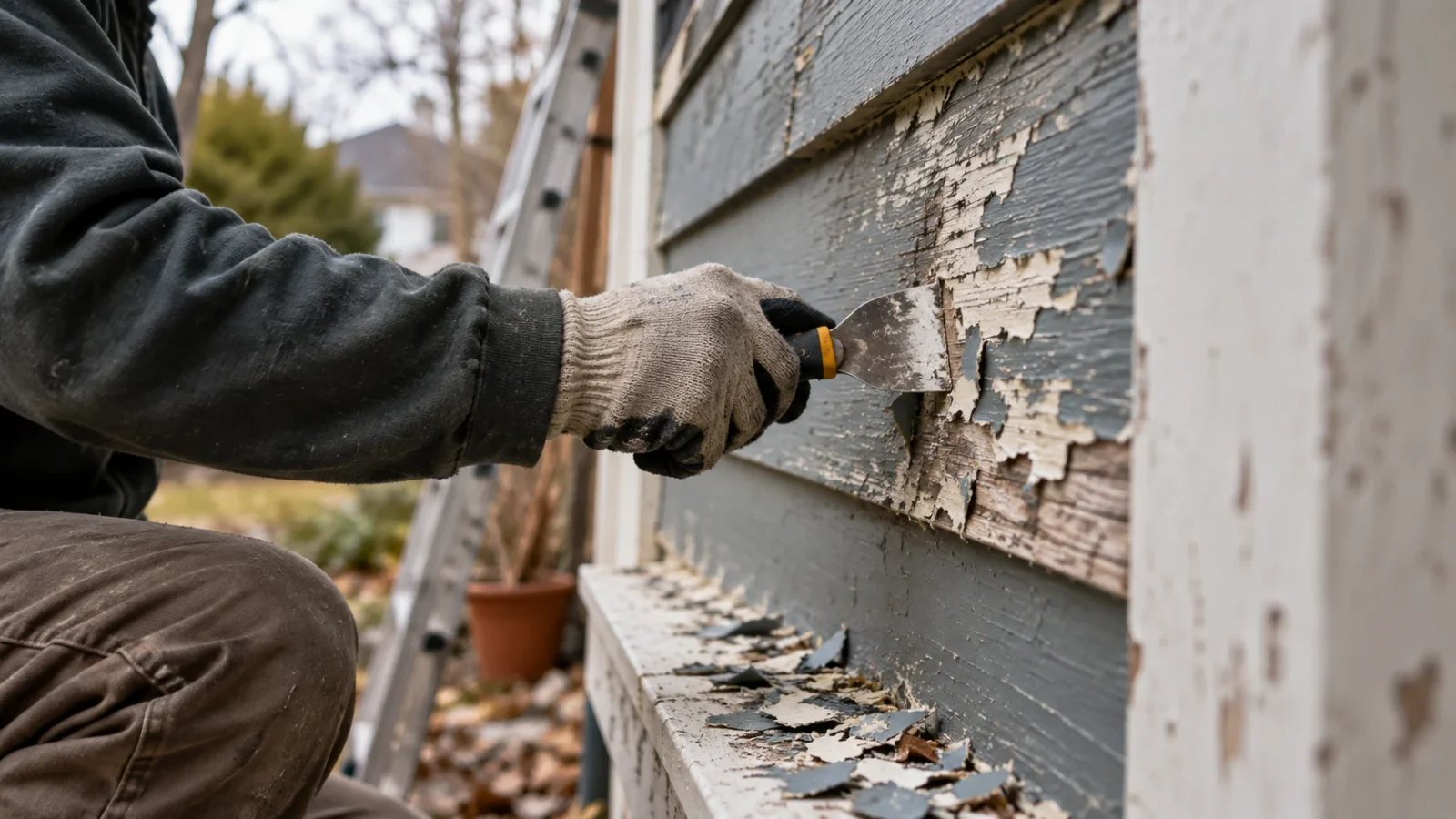
The sunny elevation and the shaded wet elevation may age at completely different speeds. Inspect chalking, peeling, open joints and soft substrate by side of the house instead of assigning one repaint date to the whole exterior.
| Trigger | House task | Reason to schedule it |
|---|---|---|
| Yearly spring walk | Inspect south/west exposures, trim, sills, joints, fascia, and splash zones | Sun and water produce localized failure before whole-wall failure. |
| Touch-up window | Repair small coating breaks after fixing moisture source and preparing the substrate | Early bare wood absorbs water. |
| Caulk review | Replace failed joints only where sealant is appropriate; do not block drainage paths | Paint cannot compensate for bad joint design. |
| Repaint planning | Track chalking, fading, adhesion, cracks, and bare areas by elevation | One wall may age years faster than another. |
| Before project | Check temperature, rain, dew, substrate moisture, and product cure requirements | Weather window can matter as much as paint quality. |
| Budget year | Get quotes before coating failure becomes widespread prep work | More failure means more scraping, repair, and labor. |
Plan repainting by elevation, not by the birthday of the whole house
Walk the four sides separately and record which exposure fails first. Strong sun can chalk and fade one elevation while shaded or splash-prone walls develop mildew or moisture-related paint failure. Look closely at end grain, trim joints, penetrations, lower siding near soil or paving, and places where gutters or roofs direct water. A localized failure pattern can justify targeted repair and touch-up long before the entire house needs repainting.
When paint peels repeatedly in the same area, investigate the substrate and moisture path before adding another coat. Soft wood, open joints, active leakage, or poor drainage must be corrected first. Older coatings may also involve lead-safe work requirements, and high access or widespread rot can turn a paint project into professional repair. Record product and preparation details after repainting so the next cycle can be compared rather than guessed.
Treat caulk as a joint detail, not a universal bead to run around every gap. Sealant belongs where the assembly is designed to move and shed water; preserve weep openings, drainage gaps and ventilation paths. Check the sealant maker’s substrate and paintability guidance, and use backer material or a different joint repair when the gap is too deep or wide for a surface bead. If failure repeats, correct the joint geometry or water source before repainting.
- Peeling returns in same wet location.
- Wood is soft beneath paint.
- Caulk traps water rather than sheds it.
- Large lead-painted surface requires disturbance.
Repaint when the coating system is failing, not when a round number arrives
Preparation usually matters more than buying a more expensive topcoat. Failed paint must be addressed to a sound edge, compatible surfaces cleaned and primed as required, and joints repaired with the right product. Homes built before 1978 can involve lead-based paint hazards, so renovation and surface preparation may fall under EPA lead-safe requirements. High access, widespread rot or repeated failure in the same joint is a reason to bring in a qualified painter, carpenter or building-envelope professional.
- Record paint product, color and application year for future touch-ups.
- Photograph recurring failure at windows, trim ends and penetrations before repair.
- Schedule work for temperature and moisture conditions that meet the coating manufacturer’s instructions.
Prep labor is often the largest part of repainting. Budgeting for small annual touch-ups can delay a much larger full-strip or carpentry project.
Inspect each elevation separately because exposure is rarely uniform. South- and west-facing surfaces may fail from UV first, while shaded or splash-prone areas can stay wet and develop peeling or soft wood. Mark recurring failure locations so you can distinguish normal coating wear from a water-entry problem. If paint keeps peeling in the same wet spot after proper preparation, investigate the moisture source before scheduling another repaint.
Pre-1978 homes can involve lead-safe renovation requirements. High ladder/scaffold work, rotten structural wood, and extensive siding repair should be handled with appropriate professionals.
A repaint plan should record the full coating system, not just the topcoat color. Note the siding or trim material, primer, finish product, sheen, preparation, repair locations and approximate weather during application. Keep leftover labeled material only if it remains usable and the manufacturer permits storage; otherwise the record still helps match a later repair. Test a small touch-up after cleaning because a new patch can differ in color or gloss even when the paint code matches. Photograph each elevation and identify the first recurring failure locations. That evidence helps distinguish normal exposure differences from a roof leak, failed flashing, gutter overflow or joint detail that needs repair before another coating is applied.
Exterior-coating questions
Should I repaint on a fixed number of years or by condition?
Use condition, exposure and coating instructions rather than repainting simply because a certain number of years passed. Look for chalking, fading, cracking, peeling, exposed substrate and failed joints. Touch-up can extend a sound coating system, while widespread loss of adhesion can justify larger preparation and repainting. Keep a record of product, surface preparation and date; poor preparation can shorten life enough that the calendar alone becomes misleading.
Which sides of a house usually need attention before the others?
South- and west-facing walls often receive more UV and heat, while shaded or wind-driven-rain exposures can stay wetter and develop different failure patterns. Trim, sills and horizontal ledges can fail before broad wall areas because they hold water. Walk each elevation separately instead of assuming the whole exterior ages evenly. The first side to need attention is the one showing coating or moisture evidence, not necessarily the oldest-looking color.
What does repeated peeling in the same spot suggest?
Repeated peeling in one location often suggests an underlying moisture source, movement, incompatible coatings or poor surface preparation rather than simply 'old paint.' Check roof and gutter drainage, flashing, plumbing penetrations, end grain and interior moisture near that spot. Repainting without correcting the cause may produce another failure in the same place. Persistent wet wood or hidden leakage deserves diagnosis before cosmetic work continues.
| Sunny exposure | Shaded or splash-prone | |
|---|---|---|
| Common clue | Chalking or fading. | Mildew, moisture-related failure, or peeling. |
| Useful inspection point | South- or west-facing surfaces. | Lower siding, trim, joints, and areas that stay wet. |
| Next step | Track wear and touch up sound areas. | Trace repeated moisture before coating again. |